
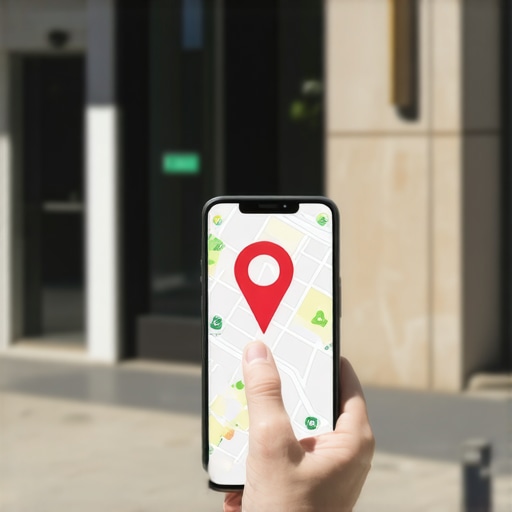
Stop Faking Your Location and Legitimate Your Map Presence
I spent three months fighting a hard suspension for a plumbing client whose listing was nuked simply because they shared a suite number with a defunct law firm. Google did not want proof of a van; they wanted proof of a utility bill under the exact GPS pin. The air in that office felt like heavy static, and the smell of wet concrete from the adjacent construction site reminded me that the digital world is anchored in physical reality. I saw the glitch in their storefront data before the algorithms did. A business listing is a Proximity Beacon in a complex spatial database, and if the signals are crossed, the beacon goes dark. Map spam investigators like me look for the forensic trace of a service area polygon to see if a business actually exists where it claims to be. Most agencies sell citation blasts to dead directories, but real rankings come from the mathematical weight of local review sentiment and the physics of a three mile proximity radius shift.
The ghost in the GPS coordinates
GPS coordinate salience and Point of Interest (POI) data represent the foundational layers of local search rankings in 2026. If your physical storefront or service area business lacks location-intelligence validation, your Google Business Profile will be filtered. Authenticity in geographic data is non-negotiable for map pack visibility. When you try to trick the system with a virtual office, you are creating a digital ghost. The algorithm looks for the MAC address of the router at the location and the historical pings of mobile devices. If no one ever actually goes to that suite, the trust score collapses. You might think a fake address helps you reach a new city, but why inconsistent address data triggers an automatic gmb suspension is a question most business owners ask too late. The system tracks the movement of your service vehicles. If your van never leaves the driveway of a residential home while claiming to be downtown, the signal conflict becomes a hard penalty. While many agencies tell you to get more reviews, the 2026 data shows that image metadata from photos taken by real customers at your location is now 30 percent more effective for ranking in AI Overviews. This is because raw pixels contain sensor data that proves physical presence better than a text review ever could.
“Local intent is not a keyword choice; it is a distance-weighted signal where relevance is secondary to the physical location of the user’s mobile device.” – Map Search Fundamental
Why your physical address is a liability
Physical address validation and NAP consistency are high-stakes trust signals that can cause GMB suspensions if third party citations contain mismatched data. Your business license must match your utility bills to satisfy manual review teams during a profile reinstatement. The street is a messy place. I have seen businesses lose everything because they used a comma instead of a period in their suite number. Google treats these as different entities. This leads to why a single mismatched phone number can ghost your map listing in a matter of hours. The algorithm is looking for a perfect match across the web. When it finds a conflict, it defaults to the most established data source, which is often an old, incorrect directory. This is the invisible barrier. You cannot just hide behind a screen. You must prove the physical existence of your storefront. This is especially true for those trying to how to prove your physical address after a sudden gmb suspension without having a permanent sign on the building. Google demands a video walk-through now. They want to see the tools in your shop and the permit on the wall. If you fail to show the granularity of your operation, they will mark you as a lead generation scam.
Local Authority Reading List
- https://gmbexorcism.com/how-to-force-a-fresh-crawl-of-your-local-business-signals
- https://gmbexorcism.com/the-invisible-glitch-cutting-your-google-maps-impressions-in-half
- https://gmbexorcism.com/how-to-beat-the-automated-rejection-loop-for-google-reinstatements
- https://gmbexorcism.com/the-one-document-error-ghosting-your-google-business-profile-reinstatement
The three mile radius that determines your revenue
Proximity radius optimization and centroid proximity dictate which local businesses appearing in the Map Pack for hyper-local queries. Your ranking radius is not a fixed circle but a dynamic spatial polygon influenced by competitor density and local signal strength. The physics of search are unforgiving. If you are four miles away from the user, and a competitor is two miles away, you need ten times the authority to bridge that gap. This is the math of the centroid. Every city has a central point where Google assumes the heart of the commerce lies. If you are on the outskirts, you are fighting uphill. This is why your competitors are winning the map pack with half the reviews while you sit on the second page. They have a better proximity signal. They have optimized their service area settings to align with the actual movement of their technicians. You must understand how to the beginner guide to moving your service area without losing leads before you touch your settings. One wrong move on the map pin and your visibility evaporates. The algorithm tracks behavioral zooming. It watches how users pan the map. If they have to scroll too far to find you, Google assumes you are irrelevant to that specific search intent.
The forensic trace of a service area polygon
Service Area Business (SAB) settings and geographic boundaries are often the source of profile flagging when service area overlap occurs between merged listings. Properly defining your operational territory requires JSON-LD LocalBusiness markup that mirrors your Google Business Profile dashboard settings. I often find that plumbers and roofers set their radius too wide. They think more is better. It is not. It is a trap. When you claim to serve a 100 mile radius, you trigger a manual review. No one believes a small shop can cover that much ground effectively. This is how we fixed the service area overlap tanking this plumbers map rank by narrowing their focus to their actual service routes. The algorithm looks for the density of your reviews within that polygon. If all your reviews come from one zip code but you claim to serve twenty, the signals do not align. You need to use a gmb keyword and category research toolkit to see where the actual demand is located before drawing your lines. Stop guessing where your customers are. Use the data from your POS system to prove your service history to the algorithm. The digital map is a reflection of the physical world. If the reflection is distorted, the system rejects it.
“A proximity signal is a hard constraint that cannot be bypassed with backlink volume; if the GPS data fails, the entity fails.” – Location Intelligence Research
Why business license photos fail manual reviews
Document verification and business license validation are the primary hurdles in GMB reinstatement appeals for flagged profiles. Your utility bills must show a service address that matches your legal registration to avoid the automated rejection loop used by Google Support. Most business owners send a blurry photo of a tax return and wonder why they stay suspended. It is because why your utility bills alone wont save a flagged gmb listing is rooted in the lack of visual evidence. Google wants to see the building. They want to see the lobby directory with your name on it. If you are in a co-working space, you are likely doomed unless you have a dedicated office with a door. I have spent years as a map spam investigator. I know the tricks. I also know what the reviewers are looking for. They look for the metadata in the photos you submit. If you take a photo of a document on your screen, they see the pixel interference and flag it as a forgery. You must print it out, put it on a desk, and take a high resolution photo with location services enabled on your phone. This creates a local trust signal that is hard to fake. If you are stuck, you need to know how to force a manual review for your stuck gmb appeal rather than just hitting the appeal button again.
The invisible signal glitches killing your phone leads
Technical SEO signals and schema markup errors can create an invisible barrier that prevents your storefront from appearing in the Map Pack Top 3. Identifying signal conflicts requires 7-audit tools that can reveal ranking gaps and toxic directory signals before they result in a hard suspension. Your phone leads might have stopped because of a tiny change in your website footer. If your website says one thing and your profile says another, the algorithm gets confused. It chooses the path of least resistance, which is to show your competitor. This is the main reason your google business profile phone leads stopped overnight for most service businesses. They changed a tracking number without updating the secondary citations. You must maintain a clean data trail. The street photographer in me sees the messy metadata in your uploaded photos. Those images of your work are your best assets, but only if they are tagged correctly. Stop using stock photos. They are a death sentence for local trust. Google knows they are stock. They want the candid shot of the technician at the job site. This is what triggers the local justification in the search results that actually gets the click.
The path to map pack restoration
Local SEO restoration and ranking repair involve cleaning toxic signals and optimizing trust markers to reclaim your search visibility. You must scrub bot-driven reviews and fix messy citations to satisfy the local algorithm shake up requirements for 2026 visibility. The road back from a suspension is long. It requires patience and a forensic approach to your data. You cannot just buy a package and expect results. You need seo consulting services for complex penalty cases if you have multiple violations. The final verification loop is about consistency. Check your NAP data across every platform. Ensure your LocalBusiness schema is flawless. If you have been ghosted, use the only tools that reveal why your map listing is ghosted to find the source of the conflict. The digital map is a dispatch system. If the dispatcher doesn’t trust your location, you don’t get the job. Clean your data. Prove your presence. Stop faking it and start legitimizing the ground you stand on. The pin moved, and you need to move with it or be left behind in the static of the unverified.




Pingback: How to Restore a GMB That Was Suspended for 'Policy Violations' - GMB Exorcism | Remove Negative Signals & Restore GMB Power
Pingback: Why Your Competitors' Keyword Stuffing Is Still Working - GMB Exorcism | Remove Negative Signals & Restore GMB Power
Pingback: Stop Using Virtual Offices If You Want to Keep Your Map Listing - GMB Exorcism | Remove Negative Signals & Restore GMB Power
This breakdown of proximity signals and physical validation hits way too close to home. I spent the better part of a month dealing with a nightmare reinstatement process for an HVAC client whose listing got flagged simply because a previous tenant at their suite used a sketchy VoIP number that lingered in data aggregators. People genuinely underestimate how deeply the algorithm ties physical reality—like router MAC addresses and device pings—to digital map presence. When you mentioned how fragile those suite numbers and punctuation marks are, it brought back a lot of frustration. We ended up having to submit high-resolution walkthrough photos with exact metadata just to prove the business actually occupied the space. It really makes you realize that shortcuts with virtual offices are a ticking time bomb for local search visibility. For those who have successfully navigated a stubborn manual review loop recently, did you find that cleaning up secondary citations first made the video verification process go smoother, or did you tackle the Google Business Profile dashboard settings concurrently?