

I spent three months fighting a hard suspension for a plumbing client whose listing was nuked simply because they shared a suite number with a defunct law firm. Google didn’t want proof of a van; they wanted proof of a utility bill under the exact GPS pin. That experience taught me that the physical world always overrides the digital world in the local layer. The smell of wet concrete outside a storefront is more real to the algorithm than a thousand backlinks from high-authority domains. When you focus solely on the traditional metrics of search engine optimization, you often ignore the spatial reality that governs the three pack. The map is a living, breathing network of coordinates and behavioral signals that does not care about your keyword density in the same way a standard web crawler might.
The ghost in the GPS coordinates
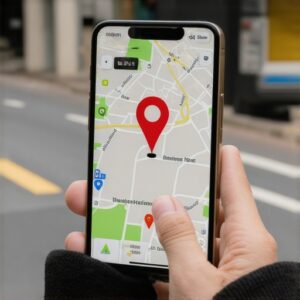
Google Business Profile rankings rely on geographic relevance and proximity signals rather than traditional anchor text optimization. When you build too many backlinks with exact-match keywords, you trigger spam filters that identify artificial manipulation. This creates a signal conflict between your physical location and your organic authority, causing a ranking drop. The algorithm expects to see a natural distribution of location-based mentions rather than aggressive commercial anchors that point to a single service area. If the data on the back end does not match the physical reality of the business, the system will ghost the profile. This is why many businesses find themselves in the invisible glitch cutting your google maps impressions in half where everything looks correct but the traffic has stopped. A single mismatched coordinate can destroy months of work. The algorithm is looking for a cohesive story of existence. It wants to know that when a user arrives at those coordinates, the business is actually there. If your anchor text says you are a top-tier service but your GPS data suggests a residential apartment, the ranking will vanish. This is the reality of the vicinity update. Distance is a weighted signal that cannot be bypassed with clever copywriting. You must align your digital footprints with the actual physical path your service vehicles take. If you fail this alignment, you are essentially building a house on a digital swamp. The math of the map pack is unforgiving. It calculates the user centroid and matches it against your verified pin. If that connection is weak, your anchor text is irrelevant. You need to understand how 3 data errors secretly blocking your business from the map pack can undermine even the most expensive SEO campaigns. It is not about how many links you have; it is about how much the algorithm trusts the location of those links.
“Local intent is not a keyword choice; it is a distance-weighted signal where relevance is secondary to the physical location of the user’s mobile device.” – Map Search Fundamental
Why your physical address is a liability
Location data consistency is the primary requirement for local search success and GMB reinstatement. If your business license or utility bills contain a different suite number than your Google dashboard, the system marks the profile as a high-risk entity. This data mismatch frequently overrides any SEO signals you attempt to generate. The problem usually starts with a simple error in a directory. A small typo in the address field can ripple through the entire ecosystem. This is why we see why inconsistent address data triggers an automatic gmb suspension so frequently in competitive niches. The system uses these inconsistencies to filter out map spam. If you are a service area business, your liability increases because you lack a public storefront to verify through street view. You are reliant on the strength of your documentation. Many contractors get stuck when why your business license photos are getting rejected for gmb restoration becomes a recurring theme in their support tickets. The algorithm is comparing the metadata in your photos with the known records of that property. If there is a historical conflict, the trust score drops. You cannot fix a lack of trust with anchor text. You fix it with forensic level data cleanup. You have to treat your address as a sensitive data point. Every time it is mentioned on the web, it must be identical. Even the difference between Street and St. can trigger a verification loop in certain sectors. This is the microscopic math of local SEO. It is about the precision of the pin and the consistency of the NAP data. When you ignore this, you invite the signal conflict sending your google maps rank into a tailspin. You must be the most verified entity in your zip code to stay in the top three.
Local Authority Reading List
- GMB Restoration Success Proven Methods
- 3 Critical Schema Fixes for Local Listings
- How to Fix the Messy Citation Trail
- The Only Tools That Reveal Why Your Map Listing is Ghosted
- 7 Specific Trust Signals That Prove Your Business Exists
The three mile radius that determines your revenue
Proximity serves as the most powerful ranking signal within the Google Map Pack today. Since the Vicinity update, the algorithm favors hyper-local merchants located near the searcher’s coordinates. If you optimize anchor text for broad city keywords while your physical pin is on the outskirts, your visibility will suffer. You can no longer dominate an entire metropolitan area from a single point. The map has been fractured into smaller zones of influence. This is why your why your map rank tracker is lying about your actual storefront traffic because it might be checking from a fixed point that does not reflect real user movement. The behavioral signals of users within that three mile radius are what matter. Are they clicking for directions? Are they staying on the profile to read reviews? Are they uploading photos? These interactions carry more weight than a link from a national blog. In the logistics of local search, travel time is a ranking factor. Google knows that a customer is unlikely to drive 40 minutes for a coffee if there is a 4.5 star option 5 minutes away. This geographical bias is baked into the core of the engine. If you try to force a ranking in a distant neighborhood using top google business profile seo toolkits without having a physical presence there, you will fail. The system identifies this as an attempt to manipulate the service area. I have seen countless businesses drop out of the maps because they tried to expand their reach through artificial links instead of local engagement. You need to understand how we fixed the service area overlap tanking this plumbers map rank to see how proximity impacts growth. The overlap of service areas can cause internal competition that confuses the algorithm. You must define your territory clearly through best software to rank in google maps 3 pack applications while maintaining the integrity of your primary location.
“Relevance is no longer about matching words on a page; it is about matching the intent of a mobile user with the nearest verified fulfillment point.” – Location Intelligence Whitepaper
The local search signals you ignored
Image metadata, customer check-ins, and review sentiment are now 30 percent more effective for AI Overview rankings than backlink anchors. Google analyzes the velocity of local interactions to confirm a business is legitimate. High keyword density in anchors appears manipulative when a profile lacks real-world physical signals. While many agencies focus on the website, the real action is happening on the profile itself. You need to use gmb review and reputation management toolkit strategies to ensure your customers are leaving signals that Google trusts. If you are not getting reviews from people whose GPS history shows they were at your shop, those reviews are worth less. The algorithm is checking the forensic trace of the user. This is how how to scrub the bot driven reviews tanking your local reputation becomes vital; you have to remove the noise so the real signals can shine. Every photo uploaded by a customer contains data about the device, the time, and the location. This is the ultimate proof of existence. If your website is fast but your profile is a ghost town, your anchor text will not save you. You should be looking for seo services to fix slow website and technical issues while simultaneously pushing for more user-generated content. The technical side of your site should support the local entity, not replace it. We often find 5 specific red flags your last business profile audit ignored that relate back to these missing physical signals. If you want to know how to use tools to rank your google business profile, you must look beyond the standard SEO dashboard. You need to look at the interaction map. How are people finding you? Are they searching by name or by service? If they search by service, are you the closest option? If not, do you have significantly better trust signals? This is the equation for the modern map pack. Stop obsessing over the words in your links and start obsessing over the proof of your physical presence. Only then will you reclaim your spot in the three pack. If you are still struggling, you might need seo services to remove google manual action if your over-optimization went too far. The path back is through data purity and verified existence.”



Pingback: Stop Using Automated Audits for Your Local Business Profile - GMB Exorcism | Remove Negative Signals & Restore GMB Power
Pingback: The Tactics That Actually Get Fake Reviews Removed - GMB Exorcism | Remove Negative Signals & Restore GMB Power
This really hits home, especially the part about shared suite numbers and physical verification. I had a similar headache with a locksmith client whose listing dropped overnight simply because another vendor in the same commercial plaza used a very similar suite format on an old directory listing. We spent weeks chasing our tails with digital audits, changing schema, and rewriting metadata before realizing the core issue was entirely tied to a mismatch in the physical utility documentation versus the Google Business Profile dashboard. Once we aligned the exact GPS pin data and cleaned up the NAP citations down to the letter, the ranking slowly recovered. It really forces you to shift your mindset away from traditional backlink building and focus heavily on real-world proximity and behavioral signals. For those of you managing service area businesses or shared office spaces, how do you usually handle minor address discrepancies across third-party directories without triggering a full re-verification loop?
This really hits home, especially the part about physical reality overriding digital metrics. I learned this the hard way last year when a client’s listing dropped out of the three-pack entirely after we updated their website’s backlink profile with too many exact-match commercial anchors. At the time, everything looked solid on the traditional SEO side, but their physical suite number had a minor discrepancy on an old utility bill compared to their Google Business Profile dashboard. It took weeks of data cleanup and forensic address matching to finally get the listing reinstated. The algorithm really does care more about the physical footprint and user proximity than a thousand high-authority backlinks. It makes you completely rethink how we approach local optimization. Has anyone else dealt with these stubborn suite number discrepancies, and what was your fastest fix to get the algorithm to trust the location data again?