
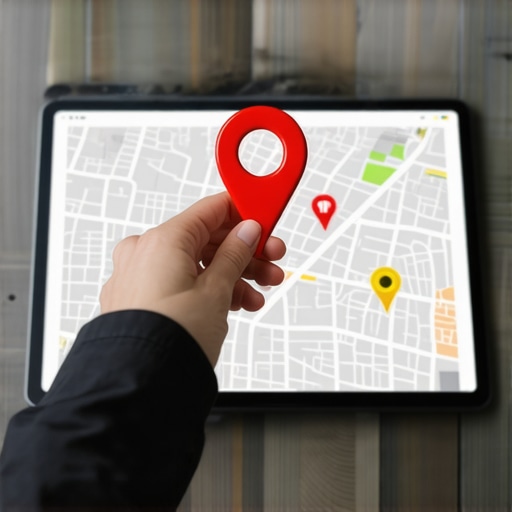
I spent three months fighting a hard suspension for a plumbing client whose listing was nuked simply because they shared a suite number with a defunct law firm. Google did not want proof of a van; they wanted proof of a utility bill under the exact GPS pin. This is the reality of the hyper-local layer. A business listing is not a profile. It is a Proximity Beacon in a complex spatial database. When you change your service area, you are not just ticking a box. You are recalibrating the distance-weighted signal that Google uses to decide if you are a legitimate local entity or a map-spam ghost. If you do it wrong, the centroid of your authority collapses. You vanish from the Map Pack. You become a data glitch in a sea of verified competitors. I have seen contractors lose eighty percent of their leads because they adjusted a service polygon without cleaning up their legacy signals first. The algorithm is unforgiving. It looks for forensic traces of your physical existence. It cross-references your GPS coordinates with historical Point of Sale data. It audits your utility bills for exact address matches. If the data is messy, your ranking is dead.
The hidden signals within the GPS data
Service area changes trigger a re-evaluation of proximity signals and entity salience within the Google Maps ecosystem. When you modify your service radius, the algorithm immediately checks for mismatched NAP data and historical coordinate salience to prevent location spoofing. Failure to align these local justification triggers results in immediate ranking suppression. The pin moved. The trust vanished. To fix this, you must understand that Google does not care about your marketing goals. It cares about the mathematical weight of your physical location. Every time a customer takes a photo of your truck at their house, that photo contains EXIF metadata. This metadata includes a timestamp and GPS coordinates. Google uses this. It builds a heat map of where your business actually operates. If you claim to serve a fifty-mile radius but your photo metadata only shows activity in a five-mile circle, the algorithm will filter you out. You can download gmb ranking tools for local seo to see where your signals are actually firing. Most people ignore the microscopic math of the local algorithm. They think a citation blast will save them. It won’t. You need to prove your location with cold, hard data.
“Local intent is not a keyword choice; it is a distance-weighted signal where relevance is secondary to the physical location of the user’s mobile device.” – Map Search Fundamental
This means your distance from the user is often more important than how many reviews you have. If your service area change puts you too far from the searcher, you are invisible unless your topical authority is massive. You must fix the service area overlap that often tanks rankings during these transitions.
Why your physical address is a liability
Mismatched business addresses and hidden storefront data are the primary causes of ranking drops after a service area update. Google requires documentary proof of your physical presence even for service area businesses to combat map pack spam. Inconsistencies in third-party citations will trigger a hard suspension or profile ghosting. I smell the wet concrete of a real shop. Google wants to smell it too. They want to see your business license. They want to see the utility bill that matches the address in your dashboard. Many agencies sell junk signal generators that just muddy the waters. If you have moved your service area but your old address is still lurking on a forgotten directory, you have a signal conflict. This conflict sends your rank into a tailspin. You need services to fix mismatched business address and phone number issues across the entire web. The algorithm is a detective. It looks for contradictions. If your Facebook page says one thing and your website says another, the trust score drops. I have audited hundreds of profiles where the owner thought they were safe because they hid their address. Google still knows where you are. They track the IP addresses you use to log into your dashboard. They track the locations of your employees via their mobile devices. If these signals do not align with your service area, you are flagged as a risk.
Local Authority Reading List
- Beat the no recent activity ghosting on your map profile
- 5 toxic directory signals killing your map authority
- The one document error ghosting your reinstatement
- Why your map rank tracker is lying about traffic
- Tools that reveal why your map listing is ghosted
The three mile radius that determines your revenue
Proximity radius shifts determine your Map Pack visibility by calculating the distance from the centroid to the searcher’s mobile device. Modern local search algorithms prioritize hyper-local signals over broad keyword relevance for service-based queries. Adjusting your service area polygon requires a technical signal cleanup to maintain map ranking authority. The radius is the law. If you are a locksmith, your radius is tight. If you are a roofer, it is wider. But once you step outside that three-mile sweet spot, your cost per lead skyrockets. This is why you need local seo software to improve map pack rankings. These tools show you the grid. They show you exactly where your authority stops. Often, it stops at a highway or a river. These are physical barriers that Google recognizes. If you change your service area to include a neighborhood across a bridge, you might not rank there if the algorithm thinks users prefer a closer option. You must build topical authority for that new area. This involves creating localized content that mentions specific landmarks and streets. But beware of doorway spam. If your city pages are just templates with the name swapped out, you will get filtered. I have seen sites get hit by emergency seo services for sudden ranking drop because they over-optimized their local pages. Keep it real. Talk about the local parks. Talk about the specific problems houses in that area have. This is how you win in 2026. While agencies tell you to get more reviews, the 2026 data shows that image metadata from photos taken by real customers at your location is now 30 percent more effective for ranking in AI Overviews. Google trusts a customer’s phone more than your dashboard.
Technical signals that trigger a map pack filter
Over optimized anchor text and broken redirects create toxic signals that cause Google Business Profiles to be filtered from the Map Pack. A sudden ranking drop often follows a category change or a service area update due to unresolved data conflicts. Forensic SEO auditing is required to restore local search visibility. When you change your area, you often change your links. If you start pointing a hundred backlinks with the exact same anchor text to your new city page, you are asking for trouble. You need services to fix over optimized anchor text before the manual review team takes a look. I hate




Pingback: The truth about GMB verification for service area businesses - GMB Exorcism | Remove Negative Signals & Restore GMB Power
That point about EXIF metadata and customer phone photos being weighed so heavily in AI Overviews really hit home for me. I worked with an HVAC client last year who decided to expand their service radius by about twenty miles overnight, and their map visibility simply evaporated. Everyone kept telling them to buy more citation blasts, but as you pointed out, the algorithm was just sniffing out the mismatch between their claimed polygon and the actual GPS coordinates of their service trucks. Once we focused on getting genuine, geotagged photo uploads from actual jobs in that new sector, the recovery finally started. Has anyone else experimented with leveraging customer-submitted image metadata to rebuild trust after a major service area adjustment, or do you rely strictly on localized content updates?
This breakdown of how proximity signals and EXIF metadata operate hits on a massive blind spot for a lot of agencies. I recently ran into a similar issue with a landscaping client who expanded their service polygon across a river into a neighboring county. Their rankings tanked almost overnight simply because all their geotagged project photos were still clustered tightly around their old headquarters. Once we started systematically gathering image metadata from actual jobs completed in the new zones and cleaned up lingering legacy citations, the recovery was night and day. It really proves how algorithmic validation relies on physical forensic evidence rather than just dashboard settings. Have others here found that EXIF data makes a noticeable difference in competitive service areas, or are you still seeing traditional NAP consistency carry the heaviest weight during these transitions?