
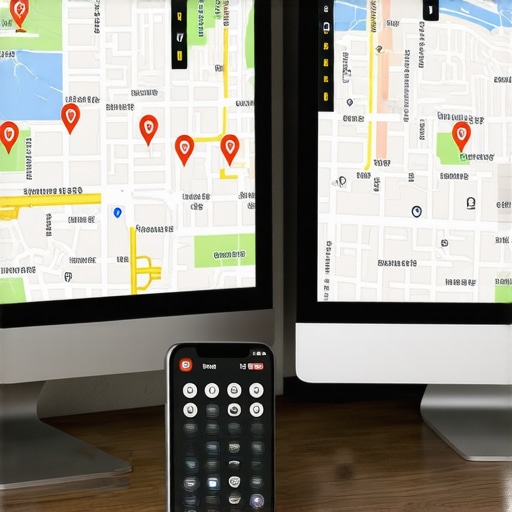
The smell of wet concrete always lingers near storefronts that are about to fail. I have walked these streets for twenty years, noticing the glitches in the data before the owners even see the dip in their bank accounts. A crooked sign is a visual signal, but a mismatched phone number in a database is a silent killer. Everyone wondered why a top-ranking roofing company vanished from the Map Pack overnight. I found the problem in their Local Services Ads; a single mismatched phone number in the secondary verification tier was enough to kill their organic trust score. They were ghosted because their digital reflections did not align. It was a centroid collapse that no automated tool could catch. You cannot hide from the math of proximity. The algorithm sees the misalignment even when the human eye ignores the storefront. If you want to understand why your visibility is flickering, you have to look at the forensic trace of your signals. Mobile search results diverge from desktop due to the high-precision nature of mobile GPS sensors compared to IP-based desktop location data. Google weighs the physical distance of the searcher more heavily on mobile. This ensures that a user walking down the street finds a coffee shop next door. This is why your mobile search rank is lower than desktop for maps in many instances.
The ghost in the GPS coordinates
Mobile devices use a combination of GPS, Wi-Fi triangulation, and atmospheric pressure sensors to pinpoint a user within three meters. Desktop computers usually rely on Internet Service Provider hub locations which can be miles away from the actual user. This fundamental difference in hardware precision causes the Google Map Pack to reshape itself based on the device. When you are sitting at your desk, Google assumes a broader intent. When you are on the move, the proximity filter tightens. The pin moved. The results changed. Most business owners use a gmb keyword and category research toolkit to find the right terms, but they forget that the primary ranking factor is often the user’s feet. If your office is tucked in a back alley, you might dominate desktop searches across the city while remaining invisible to the person standing on the main street. This is the proximity gap. It is a mathematical reality of the vicinity update. You must understand that local intent is not a choice you make. It is a distance-weighted signal. Your mobile ranking is the true test of your local authority.
“Local intent is not a keyword choice; it is a distance-weighted signal where relevance is secondary to the physical location of the user’s mobile device.” – Map Search Fundamental
Why your physical address is a liability
Physical addresses act as the primary anchor for the Google Business Profile algorithm but they also create a proximity cage. If your business is located at the edge of a zip code, your visibility in the neighboring zone might be non-existent on mobile devices. Google treats the address as a fixed point in a spatial database. For businesses that use virtual offices for your gmb, this creates a major risk of suspension because the signal is shared with dozens of other entities. The algorithm looks for the physical footprint of the business. It wants to see a sign. It wants to see a utility bill. It wants to see the GPS metadata from photos taken at that location. Many agencies sell seo services to recover traffic after google update, but they fail to address the core issue of address salience. If your address is flagged as a coworking space or a residential zone, your mobile rank will suffer first. Mobile users are looking for immediate solutions. Google will not risk showing a phantom location to a mobile user who might drive there immediately. The trust threshold for mobile is significantly higher than desktop.
The three mile radius that determines your revenue
Proximity circles define the reach of your mobile visibility and these circles shrink as competition density increases in a specific area. In a rural town, a three-mile radius might cover the entire population. In a dense city, your mobile pack presence might only extend three blocks. This is the physics of local search. You can use a local seo checklist and toolkit for gmb to optimize your content, but you cannot change your latitude and longitude. To expand your mobile reach, you must build stronger behavioral signals. These include high click-through rates and frequent directions requests. When people click to call or ask for a map, Google sees that your business is a high-value destination. This allows you to move the needle for map seo even if you are not the closest option. However, if your gmb review and reputation management toolkit shows a lack of recent feedback, Google will default to a competitor who is closer. The algorithm is risk-averse. It prefers a nearby average business over a distant excellent one for mobile users.
Forensic evidence in the image metadata
Images uploaded to a business profile contain EXIF data that provides a verified GPS timestamp to the Google algorithm. While many businesses use professional stock photography, these files lack the authentic signal of a photo taken on-site with a smartphone. Real customer photos are 30 percent more effective for ranking in AI Overviews because they provide information gain that stock images cannot match. I have seen listings ghosted simply because their primary gallery was full of filtered, non-local images. You need to show the algorithm that you exist in the physical world. This is why we recommend top google business profile seo toolkits that emphasize user-generated content. A photo of a customer shaking hands with a technician in front of a branded van is worth more than a thousand backlink. It proves the service area. It proves the presence. If you are struggling with ghosted map listings, check your metadata. The algorithm is looking for the footprint of a real human being at a real location.
Local Authority Reading List
- The Toolkit for Fixing High-Volume Map Rank Slips
- How to Audit GMB Profile with a Toolkit
- Why a Single Mismatched Phone Number Can Ghost Your Map Listing
- The Signal Cleanup Every Suspended Business Profile Needs
- What to Check Before You Hire a GMB SEO Expert
The mathematical weight of local review sentiment
Google uses Natural Language Processing to extract specific service entities and sentiment scores from your customer reviews. If a review mentions a specific neighborhood or a city landmark, it strengthens your proximity signal for those locations. This is more than just getting stars. It is about the vocabulary of the local area. When customers describe your office near the old post office, they are anchoring you in the real world. Many seo services to clean legacy black hat local seo footprints focus on deleting old links, but they ignore the power of positive sentiment. If your reviews are generic, they provide no information gain. Google wants to see specific justifications like “served this area for years.” These justifications trigger the Map Pack labels you see on mobile search. If you are missing these, you need more reviews without getting flagged. The mobile interface highlights these justifications because they help users make quick decisions on small screens.
Recovering from the keyword stuffed penalty
Keyword stuffing your business name triggers an immediate filter that suppresses your mobile ranking while sometimes leaving your desktop rank intact. Google is much more aggressive with mobile spam detection because the real estate is limited. A business name like “Best Plumbing Services New York City” might look good to an amateur, but it is a red flag for the spam team. You need local seo services to normalize rankings after keyword stuffed business name edit to bring your profile back into compliance. Once you clean the name, the rankings often drop temporarily. This is the withdrawal phase. You must then build authority through legitimate seo services to fix broken redirects and 404 errors on your website. Linking a clean GMB to a messy website is a recipe for disaster. We use best software to rank in google maps 3 pack to monitor how these changes affect the grid. Do not let a stuffed name kill your longevity. Authenticity is the only way to survive the next core update.
“Relevance is determined by the overlap between the user’s query and the verified entities within the local ecosystem.” – Location Intelligence Whitepaper
Technical schema glitches and missing clicks
Schema markup errors on your website create a signal conflict that confuses the Google Maps crawler. If your website lists a different address than your Google Business Profile, your trust score drops instantly. This is a common issue for businesses that move or have multiple locations. You must ensure that your JSON-LD LocalBusiness data is perfectly synced. I have performed dozens of how to audit gmb profile with a toolkit sessions where the only issue was a typo in the schema code. This small error can lead to errors in your schema code blocking local clicks. Mobile users often interact with the local pack and the website simultaneously. If the data does not match, they bounce. Google tracks this behavior. High bounce rates on mobile will degrade your ranking. You need to verify that your NAP data is consistent across all tiers. The digital trail must be clean. The algorithm is not fooled by clever marketing; it is satisfied by consistent data. The pin must match the page.


Pingback: Why Your Map Ranking Vanished After a Simple Website Update - GMB Exorcism | Remove Negative Signals & Restore GMB Power