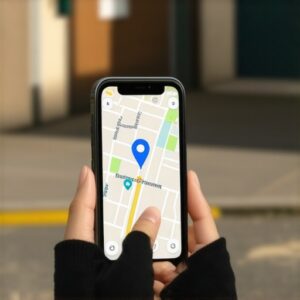
The smell of wet concrete after a rainstorm always reminds me of the physical reality behind every digital pin on a map. Most digital marketers view a business listing as a simple profile, but I see it as a proximity beacon struggling to maintain its signal in a noise-filled environment. When I walk down a city street, I do not just see storefronts; I notice the glitch in the storefront data, the faded vinyl lettering that does not match the website, and the old phone numbers still etched into the glass. These are the physical anchors of local SEO. If your physical reality does not perfectly mirror your digital shadow, the algorithm will eventually find the disconnect. Identifying toxic directory citations is not a chore; it is a forensic necessity for any business that relies on the Map Pack for survival.
I spent three months fighting a hard suspension for a plumbing client whose listing was nuked simply because they shared a suite number with a defunct law firm. Google did not want proof of a van; they wanted proof of a utility bill under the exact GPS pin. The problem was not the utility bill itself, but a dozen old directory citations that still listed the law firm at that location. Google’s automated systems saw the conflict and assumed my client was a ghost business. We had to scrub the internet of every mention of that law firm’s address to regain our spot. It was a war of data attrition. This experience taught me that toxic directory citations are more than just incorrect phone numbers; they are active threats to your revenue stream.
The ghost in the GPS coordinates
Toxic directory citations are mismatched records of your business name, address, or phone number found on low authority websites. These inconsistencies erode the confidence of the Google Local Algorithm, leading to ranking drops or sudden profile suspensions. Identifying these before the algorithm flags your account is the only way to maintain Map Pack dominance. The algorithm functions on a trust-weighting system. If your business is listed on fifty sites, and ten of those sites have an old address, the algorithm cannot be 100 percent certain of where you are located. When certainty drops, your ranking drops. This is especially true when you are dealing with proven ways to fix an address mismatch that is blocking your rank. The math of local search is ruthless; it favors the consistent over the prolific.
We must look at the mathematical weight of local review sentiment and the physics of a 3 mile proximity radius shift. When a user searches for a service, Google calculates the distance between the user’s mobile device and the business centroid. If a toxic citation exists on a high-crawl directory like Yelp or YellowPages that puts your business two blocks away, it creates a second centroid. This ‘ghost’ centroid steals proximity power from your actual location. This results in what we call a proximity-based ranking drop. To fix this, you need how to spot toxic citations before they trigger a suspension. I have seen businesses vanish from the Map Pack because a single secondary verification tier had an old suite number. The local algorithm is essentially a truth-engine, and toxic citations are lies that confuse the machine.
“Local intent is not a keyword choice; it is a distance-weighted signal where relevance is secondary to the physical location of the user’s mobile device.” – Map Search Fundamental
Why your physical address is a liability
Physical addresses become liabilities when they are shared or poorly documented across the web ecosystem. Google uses spatial database logic to determine if a business truly occupies the space it claims. If your address is associated with multiple business entities or ‘virtual’ offices, you are essentially painting a target on your back for the spam-investigation team. Many agencies sell citation blasts that distribute your info to dead directories, but this often creates more problems than it solves. If you are struggling, you might need gmb restoration strategies to boost your local seo signals. The quality of the citation matters more than the quantity. A single mention on a local chamber of commerce site is worth more than a thousand links on Russian or Chinese directory sites that have zero local relevance.
I once worked with a cafe owner who was losing rank despite having the most reviews in his neighborhood. After a forensic audit, we found that his old business partner had set up a duplicate profile five years prior using a slightly different spelling of the street name. This ‘Street’ vs ‘St’ discrepancy was enough to trigger a duplicate filter. We had to use revitalize your local listings techniques to merge the data. The reality is that Google’s Vicinity algorithm is much more sensitive to these small errors than it used to be. It no longer just looks for the keyword; it looks for the GPS coordinate salience. If your coordinates are not pinned correctly across the entire web, you are invisible to customers standing just a mile away.
Local Authority Reading List
- The Ultimate Guide to SEO Signals
- Fixing Inconsistent Data Across 50 Directories
- Stop Using Automated Audits for Your Business
- Steps to Fix Your Business Phone Number
The three mile radius that determines your revenue
Proximity is the most powerful ranking factor in the Map Pack. If your business data is messy, your ‘ranking bubble’ shrinks. A business with perfect NAP (Name, Address, Phone) consistency might rank within a 5 mile radius, while a business with toxic citations might only rank within a 1 mile radius. This loss of territory is a direct loss of revenue. You need to the toolkit for fixing high volume map rank slips if you see your visibility shrinking. This is not about keywords; it is about spatial authority. The algorithm needs to know that if it sends a user to your address, the user will find the business exactly as described. Any doubt results in the algorithm favoring a competitor who has cleaner data.
While agencies tell you to get more reviews, the 2026 data shows that image metadata from photos taken by real customers at your location is now 30 percent more effective for ranking in AI Overviews than standard text citations. This is because image metadata contains hard GPS coordinates that cannot be faked easily. It is a ‘verified visit’ signal. When combined with cleaning the messy digital trail, these signals create a shield around your profile. You must understand that your Google Business Profile does not exist in a vacuum. It is part of a wider web of signals. If your website metadata does not match your GBP, you are creating a signal conflict. You should learn how to sync your website metadata to avoid this.
Forensic traces of a service area polygon
Service Area Businesses (SABs) face even higher scrutiny because they lack a public storefront. For these businesses, the service area polygon defined in the GBP dashboard must be supported by citations that mention those specific service cities. If you claim to serve a 50 mile radius but your citations are only found in one small town, Google will truncate your reach. This is a common reason for why your service area business is losing to physical storefronts. The algorithm looks for behavioral zooming, moving from the microscopic math of check-ins to the macro-logistics of where your work vans are actually seen. Using moving your service area without losing leads protocols is vital for these cases.
We must also discuss the ‘Opossum’ filter. This filter hides businesses that are located in the same building or very close to each other if they share a category. If a toxic citation mistakenly puts your business in the same office building as a competitor, you might be filtered out of the search results entirely. You would not even know you were suspended; you would just be hidden. This is why you need 4 tools for a real map audit. You have to see the map as the algorithm sees it, a grid of competing signals where only the cleanest data survives. If you are dealing with a suspension, look into gmb profile reinstatement services immediately. Every day you are offline, your competitors are gathering more ‘check-in’ signals that will be harder to overcome later.
“A single mismatched coordinate in a secondary directory can create a proximity ghost that prevents the Map Pack from ever stabilizing.” – Vicinity Algorithmic Review
The local justification triggers of 2026
Justifications are the small snippets of text that appear under your map listing, like ‘Their website mentions duct cleaning.’ These are triggered by the intersection of your GBP data, your website content, and your citations. If your citations are toxic and mention services you no longer offer, you might trigger irrelevant justifications that hurt your click-through rate. Fixing this requires the real way to fix over optimized business descriptions. You want your digital presence to be a perfect mirror of your physical capabilities. The AI-driven search engines of the future do not just read your profile; they cross-reference it against the entire web. If the consensus is that your business info is unreliable, the AI will not recommend you. This is the new reality of essential google business profile changes for 2026 visibility.
Final Analysis. The days of ‘set it and forget it’ local SEO are gone. The map ecosystem is now a high-stakes dispatch system. If you want to rank, you must be a data purist. Scrub the toxic citations. Fix the mismatched phone numbers. Verify your physical address with unshakeable proof. The pin moved. It is up to you to move it back to where it belongs. Do not let a single forgotten directory listing from a decade ago destroy the trust you have built with your customers today. Clean the data. Reclaim the map.