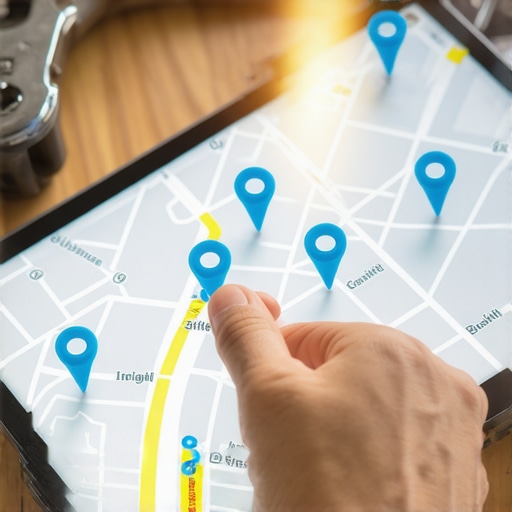
I walk the city streets and notice the glitch in the digital storefront before I even see the physical one. It smells like wet concrete after a morning storm. My camera lens captures the faded vinyl on a plumber’s van, but my phone shows a different reality; a pin dropped three blocks away in the middle of a park. This is the disconnect where local rankings die. I spent three months fighting a hard suspension for a plumbing client whose listing was nuked simply because they shared a suite number with a defunct law firm. Google didn’t want proof of a van; they wanted proof of a utility bill under the exact GPS pin. We had to dig through layers of digital sediment to find the error. The pin moved. The phone stopped. I saw the error in the raw data. This was a classic case of proximity collapse caused by a single mismatched metadata string. It was the kind of forensic work that most agencies avoid because it requires looking at the actual street level, not just a spreadsheet of keywords.
The ghost in the GPS coordinates
Service area plumbers frequently experience ranking gaps when their GPS coordinate salience fails to align with their service area polygons. Fixing this requires SEO services to rebuild trust after spammy lead gen listings have muddied the waters. Professionals must audit GMB signals and NAP data to restore map pack visibility. While most people focus on the city name, the local algorithm is actually calculating the mathematical distance between the user and the nearest verified service signal. The street photographer knows that a photo of a van parked at a residential address is worth more than a dozen stock images. Google uses the EXIF data in your customer photos to verify your location. If your technicians are not taking photos at the job site, you are leaving ranking power on the table. You are essentially invisible to the bots that crawl for proximity triggers. If you want to understand the deeper mechanics, you should look at the logic behind googles local ranking recovery process to see how these signals are weighted.
Why your physical address is a liability
Virtual offices and coworking spaces are suspension magnets for service area businesses like plumbers. Using local SEO services to fix GMB issues caused by these addresses is a high priority. To fix low GMB rankings, you must prove physical presence through utility bills and business licenses that match your GPS pin. The reality of a virtual office is a digital ghost. It has no physical substance in the local ecosystem. I have seen countless plumbers lose their entire livelihood because they thought a prestigious downtown address would help them rank. Instead, it triggered a manual action. You cannot hide from the street level truth. The algorithm knows the difference between a suite that houses fifty businesses and a legitimate dispatch center. If you have been flagged, you need to know why your coworking space address is a suspension magnet before you try to appeal. The repair process starts with a clean break from the fake data. You have to ground your business in a physical reality that the bots can verify with certainty.
“Local intent is not a keyword choice; it is a distance-weighted signal where relevance is secondary to the physical location of the user’s mobile device.” – Map Search Fundamental
Local Authority Reading List
- The ultimate guide to seo signals and effective ranking repair
- How to clean up a messy citation trail without hiring an agency
- Ranking repair secrets optimizing seo signals for rapid results
- Stop using virtual offices if you want to keep your map listing
The three mile radius that determines your revenue
Proximity math determines whether a plumbing business appears in the Map Pack for a specific search. To fix missing map pack rankings, you must optimize for behavioral signals and local justification triggers. This involves cleaning the meta signals that might flag your listing as spam and ensuring your service area is accurately defined. The radius of your ranking is not a perfect circle. It is a jagged shape influenced by competitors and historical traffic. If a competitor has more verified reviews from a specific neighborhood, their radius will push into yours. This is spatial warfare. You need a gmb ranking toolkit that shows you the heat map of your visibility. Most tools lie. They show you a single point of data from a desktop computer. But the street level reality is that your rank changes as the user drives down the road. You can see how this works by studying why your map rank tracker is lying about your real traffic. The only way to win is to flood the area with genuine local signals. This means reviews from real customers in that specific zip code. It means local news mentions. It means being a part of the physical landscape.
The truth about lead gen toxicity
Spammy lead gen listings often leave a toxic digital trail that damages the reputation of legitimate plumbers. To rebuild trust, you need SEO services that can neutralize negative signals and remove google manual actions. This process involves auditing your map listing for toxic anchor text spikes and fixing nap inconsistencies across the web. I have seen lead gen companies create hundreds of fake listings that eventually get nuked. When they go down, they often take legitimate businesses with them through association. It is a contagion. You might find your phone number or your address linked to a spam network without your knowledge. This is why you must how to spot toxic directory citations before google does. Cleaning this mess takes time and forensic precision. You have to disconnect your brand from the waste left behind by these lead sellers. It is about restoring the integrity of your digital identity. The street photographer values the candid moment; the algorithm values the candid data. Any sign of manipulation is a red flag that will eventually be caught.
How to neutralize the manual action
Manual actions on Google Business Profiles require specific documents and forensic proof to resolve. Using services to repair a hacked website or remove a penalty is essential for local SEO recovery. You must provide business license photos and utility bill proof that the spam team will accept as legitimate. Most appeals fail in seconds because the documentation is sloppy. You need to provide a narrative that explains the discrepancy. If you moved your office, you have to prove the old one is closed and the new one is active. If you were hacked, you have to prove the malicious code is gone. You can find the necessary steps in how to restore a gmb that was suspended for policy violations. It is not enough to just click the appeal button. You have to build a case like a lawyer. The street photographer knows that every detail in the frame matters. In a manual review, every character in your documentation matters. One mismatched phone number can end the process before it begins. You are fighting a machine that is programmed to find reasons to say no. You have to give it a reason to say yes.
Technical Restoration Toolbox
- The toolkit for local visibility that actually works
- The technical schema audit that finds your missing clicks
- How to fix the brand confusion from sloppy gmb merges
- How to build a local seo stack for under fifty dollars
The forensic audit of the map pack
Map pack rankings are often lost due to hidden metadata errors and schema markup conflicts. A deep map pack audit can identify toxic anchor text and competitor keyword stuffing that is suppressing your visibility. Using local seo tools for gmb helps you see the hidden signal errors that are blocking your growth. I often look at the source code of a plumber’s website and find schema that points to a completely different city. This is a fatal error. The bots see the conflict and choose to ignore the listing entirely. It is a digital stutter. You need to the secret signal errors hidden in your schema markup to fix these gaps. A forensic audit looks at everything from your photo metadata to your response time on messages. Every interaction is a signal. Every pixel is a piece of evidence. If you are not monitoring these small details, you are not really doing SEO. You are just guessing. The street photographer sees the rust on the pipe; the SEO strategist sees the decay in the citation trail. Both are signs of a larger problem that must be addressed before the structure fails.
Why your mobile search rank is different
Mobile search results often vary from desktop map rankings due to site speed and real-time proximity tracking. To fix low mobile rankings, you must optimize your mobile site speed and ensure your Google Business Profile is fully synchronized with your website metadata. The user’s physical location is the primary filter for mobile search. If a plumber is standing in a basement with bad reception, the search results will reflect that lag. You can read more about why your mobile search results dont match your desktop map rank to understand this divergence. The algorithm is trying to provide the most immediate solution possible. This means the plumber who is physically closest to the user will almost always win on mobile, provided their profile is healthy. If your profile has hidden metadata errors, you will lose to a closer competitor even if your SEO is technically superior. It is a game of inches. The street photographer knows that a half-second difference in a shutter click changes the entire image. In mobile SEO, a half-second of load time changes your entire ranking. You have to be fast, you have to be close, and you have to be verified.