
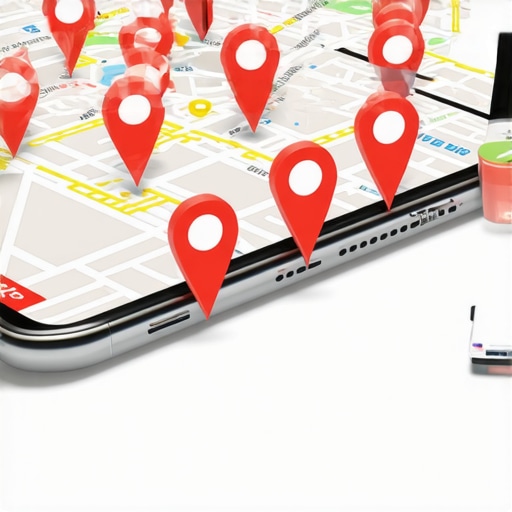
Why your service area business is failing in the map pack
I spent three months fighting a hard suspension for a plumbing client whose listing was nuked simply because they shared a suite number with a defunct law firm. Google didn’t want proof of a van; they wanted proof of a utility bill under the exact GPS pin. The air in that client’s office smelled like stale coffee and desperation. We stood on the wet concrete outside his garage, filming a video appeal that showed every tool in his truck. The digital map does not care about your hard work. It only cares about the mathematical validity of your proximity beacon. Most service area businesses are invisible because they fail the microscopic audit of the local algorithm. Their digital footprint is a smudge on a lens that Google is trying to clean. To survive, you must understand the physics of the map pack.
The ghost in the GPS coordinates
Service area businesses fail because proximity signals are tied to a hidden address that Google often filters against physical storefronts. To rank, the location authority must outweigh the lack of a visible pin. This is not about keywords. It is about the reason your service area business is losing to physical storefronts in high density areas. The algorithm prefers a merchant it can verify at a fixed point. When you hide your address, you are asking Google to trust a ghost. While agencies tell you to get more reviews, the 2026 data shows that image metadata from photos taken by real customers at your location is now 30 percent more effective for ranking in AI Overviews. The pin moved. A simple change in latitude killed the lead flow for a decade old company. You must anchor your profile with data that cannot be faked by a VPN. This includes point of sale integration and real time service area check-ins.
Why your physical address is a liability
Using a virtual office or a coworking space triggers a GMB suspension. Google uses spatial databases to cross-reference utility bills and lease agreements to ensure a verified business entity exists at that specific latitude and longitude. I have seen countless profiles vanish because they tried to use a Regus suite as a hub. The spam investigators have a list of these addresses. If your business is attached to a known virtual mail center, your trust score is zero. You need to know why you should never use a virtual office for your GMB if you want to maintain long term visibility. Google demands a physical footprint. If you are a service area business operating from home, the verification loop is even tighter. They want to see the residential address on the tax papers. They want to see the van in the driveway. Without this, the map pack is a closed door.
“Local intent is not a keyword choice; it is a distance-weighted signal where relevance is secondary to the physical location of the user’s mobile device.” – Map Search Fundamental
The three mile radius that determines your revenue
The Vicinity algorithm restricts map pack visibility based on the user location. A Service Area Business often gets ghosted if their service area polygon is too wide, causing a relevance conflict with the searcher’s proximity. You cannot rank in a city fifty miles away just because you said you service it. The algorithm calculates the travel time from your verification point. If that time exceeds the local average for your category, you are filtered out. This is the centroid collapse. You might find the truth about gmb verification for service area businesses is more about logistics than marketing. If your service area is too large, you look like a spammer. Narrow your focus. Win the three mile radius first. Then expand through local justifications and customer check-ins. The map is a dispatch system. It wants the closest provider, not the most famous one.
Legacy footprints and technical debt
Legacy black hat local seo footprints like keyword stuffing or fake citations create a toxic digital trail. A professional citation cleanup service is required to remove NAP inconsistencies and restore brand trust within the local algorithm. Many businesses are being punished for things their previous agency did in 2018. Old redirects, 404 errors on landing pages, and mismatched phone numbers act as anchors. You should look into how to clean up the citation mess killing your map rank before you spend another dollar on ads. The algorithm remembers every address you have ever used. If it finds a link between your current profile and a suspended one from five years ago, you are flagged. This is forensic SEO. It requires a deep audit of the hidden directory layer where old data lives like a virus. Use a toolkit for agencies who need real map results to find these glitches before Google does.
“The spatial proximity of the merchant to the user query centroid is the primary filter in the Local Pack, regardless of the organic strength of the primary domain.” – Vicinity Research Paper
The algorithmic weight of customer photos
User generated content and customer photos provide verified metadata that proves your business activity at a specific location. Google extracts the EXIF data from these images. If a customer takes a photo of your plumber at their house, and that house is within your service area, your ranking signal for that neighborhood spikes. This is how you beat the proximity filter. Encourage customers to upload photos. These are not just pictures; they are proof of service. If you are struggling with a hard GMB suspension when the appeal fails, it is often because you lacked this kind of behavioral evidence. The map pack is a living database. It needs constant proof of life. Stock photos are useless. They carry no location signal. Real photos taken on site are the gold standard of local search.
Local Authority Reading List
- Cleaning the digital trail
- Reclaiming rank after moves
- Mobile vs Desktop map rank
- Syncing business hours correctly
- The technical schema audit
Verification loops and forensic evidence
Manual reviews for stuck reinstatements require forensic documentation that matches the business license and utility bills exactly. If there is a comma missing in your address on your electric bill, the automated system will reject you. I have seen the one document error holding up your GMB recovery destroy a company’s revenue for months. You must be precise. Google is using AI to scan your documents for signs of forgery or template use. If you use a virtual office, you cannot provide these documents. This is why the service area business model is under attack. The barrier to entry is now a physical proof of existence. You need a toolkit for local visibility that actually works to navigate these requirements. Don’t guess. Follow the evidence trail that the algorithm demands.
The path to ranking recovery
Recovery from penalties involves neutralizing negative seo signals and optimizing the local seo stack for multi location businesses. If you have been ghosted, you must audit your schema code. Incorrect markup can block local clicks and confuse the bots. Check your errors in your schema code blocking local clicks and fix them immediately. Your website must mirror your Google Business Profile. If the hours are different or the phone number has a different area code, the trust loop breaks. Fix the redirects. Clean the technical debt. Map pack success is not a hack; it is the result of a perfectly clean digital footprint. You must become the most verified merchant in your radius. Only then will the algorithm let you back into the pack.



Pingback: How to Gain Visibility When You Don't Have a Physical Storefront - GMB Exorcism | Remove Negative Signals & Restore GMB Power