
The long road back from a manual map penalty
The concrete outside my window is wet from a morning drizzle, smelling like copper and old tires as I stare at a suspension notice that should not exist. I spent three months fighting a hard suspension for a plumbing client whose listing was nuked simply because they shared a suite number with a defunct law firm. Google did not want proof of a van; they wanted proof of a utility bill under the exact GPS pin, a grainy photo of a lease agreement, and a timestamped video of the technician unlocking the front door. This is the reality of the hyper-local layer. You are not just a business. You are a coordinate in a spatial database that demands constant, physical proof of life.
The concrete truth about reinstatement wars
Manual penalties on Google Business Profiles usually stem from address conflicts or deceptive categories. Recovery requires forensic documentation, including utility bills and storefront photos that match GPS metadata exactly to prove physical existence. This process is often a battle against an automated rejection loop. When you are hit, you must understand how to handle a hard gmb suspension when the appeal fails by escalating with primary evidence. The algorithm sees a shared suite and assumes a lead-gen ghost. You must prove the brick and the mortar. Use the the specific documents needed to restore a flagged listing to build your case. Look at the edges of your storefront. If the signage is not permanent, the human reviewer will click reject. They want to see the physical footprint of a merchant who pays local taxes.
The ghost in the GPS coordinates
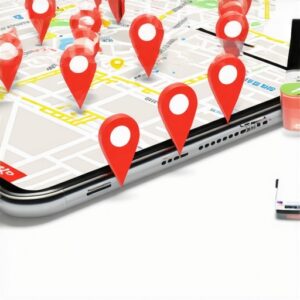
Distance-weighted signals prioritize the physical proximity of the user to the business centroid. When a profile is flagged, the proximity beacon is suppressed, making the business invisible beyond a few meters of the verified pin. Proximity is a mathematical weight. If your listing is suppressed, your 3-mile radius shrinks to 30 feet. You need to use a google maps ranking toolkit for local businesses that analyzes how your pin sits against the city centroid. I have seen rankings vanish because a business moved across the street. The change in GPS coordinates can trigger a verification reset. If you are struggling with this, examine the steps to reclaim your map rank after a storefront move to ensure your signal remains intact. Every inch matters in the Map Pack. A move of fifty feet can put you behind a competitor in a different zip code.
“Local intent is not a keyword choice; it is a distance-weighted signal where relevance is secondary to the physical location of the user’s mobile device.” – Map Search Fundamental
Why your virtual office is a proximity liability
Virtual offices trigger automated flags because they lack the physical footprint of a genuine local merchant. To survive manual review, you must address the absence of permanent signage and dedicated entrance signals. Many agencies suggest coworking spaces, but why your coworking space address is a suspension magnet is simple; Google sees fifty businesses at one pin. If you need seo services to fix gmb issues caused by virtual office or coworking space, the first step is finding a real lease. The algorithm is hunting for the ‘glitch’ in the data. It wants the street-level truth. If you cannot provide the exact photos you need to get a gmb listing reinstated, you are fighting a losing war. The Street Photographer sees the missing signage. The bot sees the lack of a Point of Sale signal. [image_placeholder_1] Your proximity beacon requires a dedicated entrance to rank.
Local Authority Reading List
- How to clean up your business profile without getting flagged
- Recovering from a mass review wipeout without panic
- The tools you need for a deep map pack audit
- The signal strategy for businesses moving to a new storefront
- How to recover a banned map listing without losing your reviews
The forensic audit of mass review removals
Mass review removal occurs when the algorithm detects an anomaly in IP footprints or a burst of sentiment that does not match historical traffic patterns. Recovery requires providing transactional evidence of real customer interactions. If you are searching for seo services to fix gmb rankings after mass review removal, you must understand the pattern-matching at play. Google looks at the velocity of reviews. If you get twenty 5-star reviews in two days but your mobile traffic does not show twenty people at your location, you get flagged. It is a behavioral mismatch. You must learn the tactics that actually get fake reviews removed if you are under attack. A competitor using a VPN is easy to spot if you know where to look in the metadata. The signals must match the physical world. If they do not, the visibility dies.
The math of category changes and visibility loss
Changing your primary category resets the relevance score of your proximity beacon. You must bridge the trust gap by updating all external citations to reflect the new primary entity classification immediately. If you used seo services to recover gmb visibility after category change, you know the dip is real. The algorithm suddenly views you as a new entity. You need how to improve google business profile ranking toolkit to force the re-indexing of your local signals. This involves deep schema markup fixes to tell the bots you are the same business, just more specialized. It is about the logic of the local justification trigger. If your citations say one thing and your profile says another, the map rank flatlines. Consistency is the only currency the Map Pack accepts.
The multi location logistics of dominance
Managing multiple locations requires a distinct silo for each GPS coordinate to prevent brand overlap and proximity cannibalization. Each storefront needs unique local signals and a dedicated service area polygon. For those using a local seo toolkit for multi location businesses, the goal is zip code saturation without signal interference. If you expand too fast, you trigger the automated filter. You need local seo services to stabilize volatile map rankings after expansion. I have seen brands lose five locations because one address was flagged. The forensic trace of a messy digital trail will kill your growth. You must sync your nap data across the entire web to keep the bots from getting confused. The algorithm hates ambiguity. It wants to know exactly where your technician is at 2 PM on a Tuesday.
“Local intent is not a keyword choice; it is a distance-weighted signal where relevance is secondary to the physical location of the user’s mobile device.” – Map Search Fundamental
The toolset for reclaiming your map pack spot
Reclaiming a map pack spot involves scrubbing toxic links and fixing the hidden metadata errors that confuse the local bots. A deep audit must identify the ‘invisible’ penalties blocking your growth. If you need to buy local seo tools for gmb, focus on those that track grid-based proximity. You need to see where your visibility drops off street by street. If you are stuck at position 12, use the honest map pack audit to find the leak. Often, it is a broken redirect or a bad agency hire. You may need local seo services to fix banned gmb listing if your old SEO team used keyword-stuffed names. I have spent decades cleaning up the mess of ‘citation blasts’. Real results come from the street-level truth. Clean the toxic backlink profile and watch the map pin move back to the top. The pin never lies. The coordinates are the only thing that matters in the end.


Pingback: How to Spot a Toxic Local Link Profile Before Google Does - GMB Exorcism | Remove Negative Signals & Restore GMB Power
Dealing with hard suspensions over shared suite numbers is honestly one of the most frustrating things we face in local SEO. I had a very similar issue with a locksmith client last year where a minor change in our utility bill format completely derailed our reinstatement appeal for weeks. The automated rejection loops are brutal, and it really feels like you are trying to prove your physical existence to an algorithm that only understands black-and-white data points. Your point about the permanence of storefront signage and exact GPS metadata matching is spot on. We eventually had to submit a timestamped video walking from the street right up to the front desk to finally break through the loop. Have others found that video evidence works more consistently now than static utility bills, or is Google still heavily prioritizing traditional paper documents during manual reviews?