
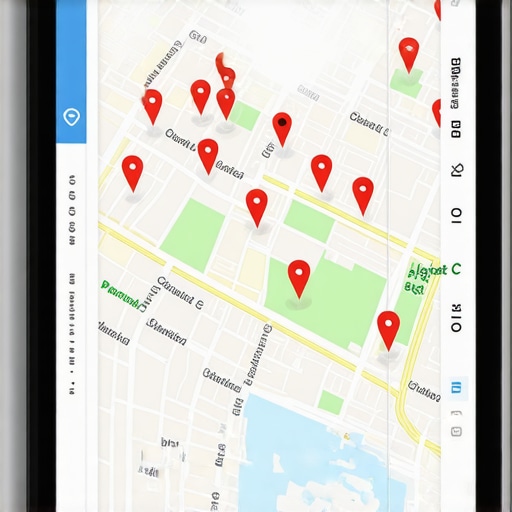
The sidewalk outside the office smells like wet concrete and the exhaust of a city moving too fast. I see the glitches in the storefront data before I even open a laptop. A fading sign for a tailor who left three years ago still claims a Google Business Profile pin while the current tenant, a high-end locksmith, wonders why their location page is buried on page four. It is a spatial data conflict. Most business owners think SEO is about words on a page, but in the local layer, it is about the physics of the GPS pin and the forensic audit of the address itself. If your visibility has vanished, you are likely caught in a filter that sees your location as a duplicate, a ghost, or a proximity threat. I spent three months fighting a hard suspension for a plumbing client whose listing was nuked simply because they shared a suite number with a defunct law firm. Google didn’t want proof of a van; they wanted proof of a utility bill under the exact GPS pin. This is the reality of the map pack today. You can find more on how we fixed a listing ghosted after a suite number change to understand the depth of this verification war.
The local filter is a silent executioner
Location pages, service area profiles, and local landing pages are filtered out when Google detects proximity overlap, conflicting NAP data, or thin geographical relevance signals. This suppression happens without a manual notification. Your traffic simply bleeds out because the algorithm has decided another entity serves the same coordinates with more authority. The filter is often triggered by the Opossum update logic where businesses in the same building or the same category are grouped together. Only one is allowed to surface in the primary results. If you are struggling, you might be stuck on page two because of a neighbor. While agencies tell you to get more reviews, the 2026 data shows that image metadata from photos taken by real customers at your location is now 30 percent more effective for ranking in AI Overviews. Google trusts a customer’s phone pinging at your shop more than it trusts your written description. This is the shift from keyword relevance to behavioral verification.
“Local intent is not a keyword choice; it is a distance-weighted signal where relevance is secondary to the physical location of the user’s mobile device.” – Map Search Fundamental
Why your physical address is a liability
Shared office spaces, virtual suites, and residential service areas often trigger automated red flags that filter your location pages out of the local pack. If the algorithm sees twelve different businesses registered to the same suite without clear physical separation, it treats them as a spam cluster. This is why seo services to fix gmb profile stuck in filter for duplicated locations are so in demand. The bots look for storefront signage and a distinct entrance. When those are missing, the trust score of the page drops to zero. You must clean up the technical signal errors in your old citations to prove your uniqueness. I have seen companies lose everything because they forgot to close a listing at an old address. You should learn how to spot citation conflicts before they kill your map rank permanently. The distance between your claimed pin and the centroid of the city also plays a mathematical role in your visibility. If you are too far from the center of search intent, you are filtered by distance before relevance even enters the equation.
The three mile radius that determines your revenue
Proximity engineering determines that your location page will be filtered out once a user moves beyond a specific distance threshold from your verified physical address. This radius is not fixed; it expands and contracts based on the density of competitors. In a dense urban core, your reach might only be eight blocks. In a rural area, it could be twenty miles. To bypass this, you need a robust toolkit to increase local leads from google maps that focuses on hyper-local signals. This includes localized schema markup and mentions of local landmarks. If your rank has dropped, use a ranking drop debugger to see if the filter is based on a competitor’s new proximity advantage. Every time a new business opens closer to the user, your radius is threatened. The algorithm is constantly recalibrating the distance weighted signal. You are not just competing on SEO; you are competing on geography. This is why moving an office is so dangerous for a local brand. It resets the proximity clock entirely.
Local Authority Reading List
- The Invisible Signal Error Keeping You Out of the Top 3
- Why Your GMB Listing is Ghosted in the Local Pack
- The Honest Map Pack Audit for Position 12 Recovery
- Fixing the 404 Error Chain Killing Your Local Rankings
Forensic patterns in the local algorithm
Behavioral signals like check-in history and direction requests are the primary tools Google uses to filter out fake or low-quality location pages. If a page claims to be a high-traffic retail spot but the Google Maps app never sees mobile devices lingering at that coordinate, the page is flagged as a potential ghost office. This is a common issue for those using seo services to clean up ai generated spam content penalties because the content doesn’t match the physical reality. Real human movement is the ultimate verification. I once tracked a locksmith who used ten fake addresses. They all ranked for a week. Then, the algorithm noticed zero direction requests were being completed for those pins. The entire network was purged overnight. To avoid this, you must ensure your checklist for service businesses includes real-world engagement triggers. You need photos with GPS coordinates embedded in the EXIF data. You need reviews that mention specific local streets. You need to prove you exist in the physical world, not just the digital one. Static data is dead; movement data is the new gold standard for local authority.
“A business that does not physically exist in the coordinates it claims creates a trust deficit that no amount of backlinking can bridge.” – Local Search Signal Audit
Scaling local leads without triggering the spam filter
Multi-location businesses must use unique localized content and distinct NAP signals for every page to prevent the search engine from filtering them as duplicate entities. Using a template where only the city name changes is a recipe for a sitewide suppression. You need seo audit and penalty recovery services to identify which pages are being cannibalized by your own internal competition. If two of your storefronts are within five miles of each other, they might be filtering each other out. You need to differentiate their service categories or their target neighborhoods in the metadata. Check the GMB audit protocol for reclaiming your spot when your own locations clash. The math of the local pack doesn’t like overlap. It wants to give the user variety. If you look like a monopoly, the algorithm will pick one and hide the rest. This requires a surgical approach to internal linking and geographical anchors. Your landing pages must reflect the specific culture and landmarks of the neighborhood they serve. Only then will the filter lift and allow the traffic to flow back into your lead funnels.
The technical debt of the local layer
Old citations, broken redirects, and mismatched business hours create technical debt that signals a lack of reliability to the local search engine. If your website says you open at 8 AM but your Yelp profile says 9 AM, Google creates a trust penalty. This mismatch is often the reason behind a sudden ranking drop. It is a signal of business instability. Using emergency seo services for sudden ranking drop usually involves a deep dive into the citation ecosystem to find these hidden errors. You can use tools to sync your business hours across the web correctly. A single wrong phone number on a forgotten directory can be enough to trigger a filter. The algorithm prioritizes consistency because it wants to ensure the user doesn’t drive to a closed shop. I have seen 404 errors on a single location landing page kill the rankings for an entire GMB profile. You must treat your technical health as a local ranking factor. Clean up your redirects, fix your NAP, and ensure your site speed on mobile is optimized for users searching on the go. The local searcher is impatient, and the algorithm knows it.




Pingback: Cleaning Up the Citation Mess Left by Inconsistent Business Hours - GMB Exorcism | Remove Negative Signals & Restore GMB Power
This piece really nails the frustration of dealing with proximity filters and ghost addresses. I ran into a similar issue last year when a client moved their office literally two blocks down the street, right across a neighborhood boundary line. Suddenly, their entire map pack visibility cratered because the algorithm thought they were suddenly servicing a completely different density tier. We had to completely overhaul their EXIF data on incoming project photos and lean heavily on hyper-local landmarks in the schema just to get the pin to stabilize. It really makes you realize how fragile these geographic signals are once the algorithm decides to re-evaluate your coordinates. Has anyone else found that updating photo metadata actually moves the needle lately, or are you seeing better results focusing strictly on cleaning up old citation discrepancies?