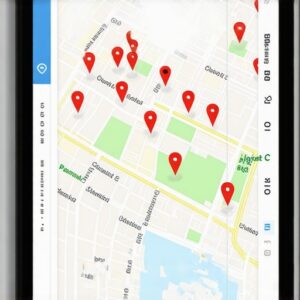
The ghost in the GPS coordinates
Businesses hiding their physical address must establish algorithmic trust by utilizing highly consistent non-physical location signals, localized website schemas, and bulletproof service area configurations to secure local map pack rankings. When you hide your storefront address, you are instantly stripped of the physical centroid advantage. You must compensate by turning your digital presence into an absolute authority beacon. Google demands proof of your geographic reality. Without a visible pin on the map, your entity validation relies entirely on alternative signals. Recovering map impressions after hiding your address is entirely possible once you understand how the proximity engine evaluates invisible listings.
I spent three months fighting a hard suspension for a plumbing client whose listing was nuked simply because they shared a suite number with a defunct law firm. Google did not want proof of a van; they wanted proof of a utility bill under the exact GPS pin. This battle taught me that Google views invisible businesses with extreme skepticism. If your documentation is off by a single letter, your profile will be flagpoles in the algorithmic desert. To prevent this, you need a highly structured approach to prove your local legitimacy without showing a public street address.
“Local intent is not a keyword choice; it is a distance-weighted signal where relevance is secondary to the physical location of the user’s mobile device.” –
Map Search Fundamental
The three mile radius that determines your revenue
Service Area Businesses must establish clear geographic bounds within their Google Business Profile dashboard to align with user proximity searches and maintain consistent neighborhood visibility. When your address is hidden, the distance calculation shifts from your storefront coordinate to the user relative position within your declared boundaries. Do not claim an entire state. This dilutes your geographic relevance. Focus on specific postal codes or municipalities. This concentration prevents search engines from filtering you out. Fluctuating service area business ranks are usually the direct result of setting service areas that are too wide, which causes internal competition and programmatic filters.
Your local rankings depend on your density of relevance. A tight boundary of ten miles is significantly stronger than an unchecked hundred-mile radius. Google reads your website service pages to confirm these boundaries. If your site does not mention the towns listed in your profile, the algorithm flags the conflict. Keep your service areas mathematically tight. Your revenue is won in the immediate three to five miles surrounding your base of operations. Spanning too far will simply get your business flagged as a spam entity.
The truth about shared office spaces and business profile bans
Virtual offices and shared coworking spaces are the primary triggers for modern Google Business Profile suspensions due to systematic address abuse by low-quality marketers. If your business operates out of a shared space, you must possess explicit, exclusive physical signage and permanent staff at the location to survive an official verification review. Standard mail drops and unstaffed desks will fail manual Google inspections. Virtual office space profile bans are common because spam algorithms automatically cross-reference known coworking databases. If you register your business at a shared address, you must be prepared to submit high-resolution video proof of your actual operations inside that building.
You need to show your entrance, your dedicated workspace, and your company branding. If your registration shares a footprint with twenty other businesses, Google local crawlers will suspicious. Use or specialized seo services to fix gmb issues caused by virtual office or coworking space to cleanly untangle your entity from overlapping digital records before the automatic suspension filters sweep your ZIP code.
How to handle the immediate threat of listing suspension
Resolving a sudden local search drop or a profile suspension requires a methodical comparison of your digital registry against your official corporate registration documents. Google accepts limited documents for verification, and they must perfectly match your profile information down to the abbreviation of the word street or avenue. If your state registry lists your business name with an inc or llc, but your profile does not, that mismatch can trigger a silent penalty. The suspended listing checklist is your primary framework for auditing these minor variations before submitting a reinstatement request.
If you fail your first reinstatement appeal, your options narrow quickly. You must avoid making repeated, frantic edits to your profile while your status is suspended. This behavior looks like programmatic spam. Instead, gather your business licenses, utility bills, and tax registrations. Ensure they all show the exact address you registered in your dashboard. Recovering after a failed reinstatement appeal requires direct human intervention from professional gmb profile reinstatement services to clean up the records and manually present the files to Google support specialists.
The invisible signal errors keeping you out of the top spot
Your NAP data across secondary directories must remain completely uniform even when your physical address is hidden from public view in the primary map pack. Local search engines aggregate historical citations from sites like Yelp, YellowPages, and regional directories to verify that your business exists at its registered centroid. Inconsistent records create trust issues for search algorithms, which lowers your organic visibility. Fixing hidden NAP inconsistencies will rebuild the foundational authority needed to push past your visible competitors.
Keep in mind that citation inconsistencies are silent killers. You might not see them on your map profile, but the web crawlers find them. If you have moved your base of operations over the past decade, old addresses still exist on forgotten websites. You need to hunt down those profiles and force them to match your current coordinates. Citations still matter for map rank because they serve as independent verification points. You can utilize simple ways to fix your nap data without a massive budget to clean up these old records systematically without paying for expensive recurring software packages.
Local Authority Reading List
- The Truth About GMB Verification for Service Area Businesses
- How to Gain Visibility When You Do Not Have a Physical Storefront
- The Only Documents Google Actually Accepts for Address Verification
- What to Do When Google Flags Your Business Address as Fake
- The Only Way to Fix a Mismatched Business Address Without a Suspension
Why your physical address is a liability
For service businesses, public storefronts with zero real walk-in traffic often trigger consumer complaints and spam reports that lead directly to profile termination. If your storefront does not have permanent commercial signage, competitors will easily report you for a guidelines violation. Hiding your address protects your listing from competitor spam fighting sweeps while allowing you to focus on localized organic content. Gmb spam fighting and review cleanup services are critical for keeping your competitors honest, but your own profile must be completely clean first.
A public address that points to a residential home or a UPS box is an open invitation for a manual flag. When you transition to a hidden service area profile, your impressions might dip temporarily. However, your long-term stability increases. You remove the target from your back. To successfully navigate this transition, you must configure your local schema markup to explicitly state your service boundaries to the search crawlers.
“Relevance is built through localized content, but trust is verified through mathematical consistency across third-party databases.” – Local Search Intelligence Report
The step by step checklist to optimize hidden listings
Successfully ranking an invisible local business requires a precise configuration of your dashboard settings, localized schema integration, and continuous engagement signals. First, toggle your profile address to hidden and select your exact service area ZIP codes. Next, install local business structured data on your homepage containing your geographic service boundaries. Finally, build citations that reference your physical registration address behind the scenes while keeping your public listings clean. Use seo services to fix keyword stuffing and content issues to clean up any over-optimized metadata that could trigger automated algorithmic filters.
Additionally, monitor your backlink health closely. Low-quality links can destroy the ranking of a service area listing because there is no physical location trust to buffer the damage. Using professional seo services to debug ranking drops with clean backlinks and content ensures that your off-page signals support your geographic claims. You can also leverage a step by step gmb ranking toolkit for beginners to establish your baseline signals without making costly structural mistakes. Ensure that your core business category is selected properly. If you ever need to change your focus, utilize seo services to recover gmb visibility after category change to minimize the ranking disruptions that normally follow category modifications.
The diagnostic tools that reveal your actual search coordinates
To accurately measure where your business is visible, you must utilize coordinate-specific local rank trackers that mimic searches from precise street corners. Standard search engine searches will only show you results from your current physical coordinates. You must test your visibility from various nodes inside your service boundary to find where your signals are failing. The tools you need for a deep map pack audit will help you map out your actual coverage area and locate hidden search filters. Knowing the best tools to rank google business profile listings gives you a significant tactical advantage over local competitors who rely on basic search trackers.
If you discover that your rankings vanish when you move just two miles away from your home base, your profile is likely suffering from a local filter. This occurs when Google groups your listing with a competitor who shares a similar category in the same immediate area. To break out of this filter, you must increase the unique geographic signals on your website by publishing hyper-local case studies and customer stories. If your listing was recently transferred to a new owner, you may need specialized seo services to restore map pack visibility after listing ownership change to re-align your physical location coordinates with the new entity’s legal records.