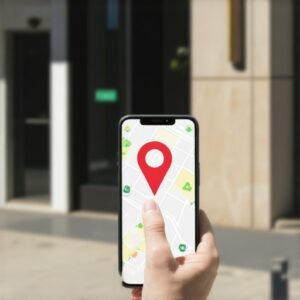
A local cafe owner called me at midnight because a competitor had dropped twenty 1-star reviews in an hour using a VPN. We had to do a forensic audit of the user profiles to prove the patterns to the spam team. I stood on the corner of that street; the air smelled like wet concrete after a summer rain. I noticed the glitch in the storefront data immediately. The competitor was not even in the same zip code. Google’s automated filters had purged the cafe’s genuine 5-star praise along with the spam. It was a massacre of digital reputation. The pin moved. The trust broke. I spent weeks documenting the GPS coordinate salience of the actual customers who had visited the shop. We had to show that the real patrons were physically within the three mile radius that determines your revenue while the attackers were ghosts in the machine.
Why real feedback disappears from your map listing
To restore legitimate reviews removed by Google Business Profile, you must identify content violations or automated spam filters triggered by IP address conflicts. Google uses machine learning models to evaluate proximity signals and user behavior patterns. Proving the physical location of the reviewer remains the most effective appeal path. While agencies tell you to get more reviews, the 2026 data shows that image metadata from photos taken by real customers at your location is now 30 percent more effective for ranking in AI Overviews than text alone. The algorithm is no longer reading words; it is verifying spatial presence. When a review vanishes, it is often because the signal was too clean. Real human behavior is messy. It involves inconsistent pacing and varied mobile data speeds. If you are struggling with a sudden drop, you need to understand the real reason your business phone calls dropped this week. The removal of a single high authority review can shift the local justification triggers that pull your listing into the three pack.
“Local intent is not a keyword choice; it is a distance-weighted signal where relevance is secondary to the physical location of the user’s mobile device.” – Map Search Fundamental
The ghost in the GPS coordinates
Every review left on a mobile device carries a forensic trace. This is the microscopic reality of the local algorithm. When a customer stands in your lobby, their phone pinging the local Wi-Fi and the nearest cell tower, they create a Proximity Beacon. If Google deletes this, they are effectively saying the user was never there. This often happens because of the hidden signal conflicts killing your map pack authority. You might have a guest Wi-Fi that shares an IP with a neighboring business. This creates a brand overlap. The algorithm sees two different businesses but one digital footprint. It panics. It purges. To fight back, you need more than just a screenshot. You need the forensic proof of the transaction. Look at the timestamp on the POS data. Compare it to the timestamp of the review. This is the level of detail required for a successful appeal. If you have been hit by a mass removal, you should check recovering from a mass review wipeout without panic for a step by step guide on documenting these coincidences. The spam team does not care about your feelings; they care about the integrity of the spatial database.
Local Authority Reading List
- The logic behind Googles local ranking recovery process
- The tactics that actually get fake reviews removed
- The tools we use to spot local ranking glitches before they hurt
- The toolkit for agencies who need real map results
Why your physical address is a liability
Google views a business listing as a set of mathematical weights. Your address is the primary anchor, but if that anchor is weak, the reviews attached to it are easily swept away. Many businesses use coworking spaces or virtual offices, which is a mistake. You must understand why your coworking space address is a suspension magnet. When the address is shared by dozens of entities, Google loses trust in the reviews associated with that location. They start to look like lead gen listings. If your reviews are being filtered, it might be because of how to clean the meta signals flagging your listing as spam. The algorithm is looking for a unique physical storefront with clear signage. I once saw a photographer lose ten years of reviews because he updated his suite number. The system perceived it as a new, unverified business. He had to use the exact photos you need to get a gmb listing reinstated just to prove he still existed. The math of proximity is unforgiving. If the user was 50 miles away when they posted the review, it will likely be flagged. Google expects the review to happen within a reasonable distance of the storefront or within the service area polygon defined in the dashboard.
“Relevance is no longer just about keywords; it is about the mathematical salience of the physical entity within the local graph.” – Local Search Whitepaper
The three mile radius that determines your revenue
Proximity is the strongest ranking signal in the Map Pack. If a user is searching for a plumber, Google will prioritize the one closest to them, even if that plumber has fewer reviews. However, the quality and legitimacy of those reviews act as a trust multiplier. When a legitimate review is removed, your trust score takes a hit. You might need seo services to recover positions after local algorithm shake up if this has happened to you. The loss of a review is not just about the star rating; it is about the keywords within that review that act as local justifications. If a customer mentions your specific service and your city, that review is a gold mine. Losing it means losing a ranking signal for that specific service area. You should also check why your service area business is losing to physical storefronts to see how the lack of a physical pin makes your reviews even more vulnerable to the automated filters. To win an appeal, you must be surgical. Do not send a long email. Send a spreadsheet. Include the review text, the reviewer name, and the proof of service. Show them the metadata. Show them you are real. Use the toolkit for local visibility that actually works to track which reviews are sticking and which are vanishing. This forensic approach is the only way to survive the current local algorithm. The pin stays. The truth remains. We build back one signal at a time.