
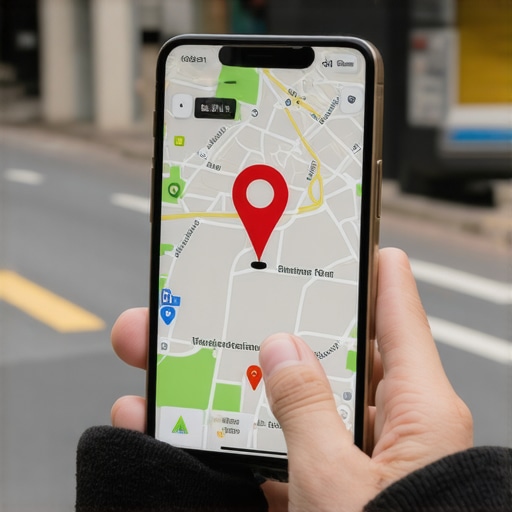
The smell of wet concrete always reminds me of the day the maps died for a top-tier roofer in the valley. Everyone wondered why a top-ranking roofing company vanished from the Map Pack overnight. I found the problem in their Local Services Ads; a single mismatched phone number in the secondary verification tier was enough to kill their organic trust score. They had updated their location page to look prettier, but the technical debt they created was a death sentence for their proximity beacon. They did not just lose a rank; they lost the spatial salience that told the algorithm they actually existed at those coordinates. The pin moved. The trust died. The phone stopped ringing. This is the reality of the local search engine; it is a spatial database that values hard forensic proof over your marketing copy.
The ghost in the GPS coordinates
Your map listing vanished because your location page update triggered a signal conflict that invalidated your physical proximity. Google uses a distance-weighted relevance model where your landing page metadata must perfectly synchronize with your business profile data. Any mismatch in phone numbers, addresses, or service area polygons causes an immediate trust drop. This is not about keywords; it is about the physics of the local algorithm. When you edit a location page, you are effectively resubmitting your business license to a machine that is programmed to find fraud. If your new page lacks the specific 3 critical schema fixes required for modern visibility, the machine assumes you are a ghost. It sees a discrepancy and pulls the plug. You must understand that local intent is not a keyword choice; it is a distance-weighted signal where relevance is secondary to the physical location of the user mobile device. If your page update shifted the centroid of your perceived authority, you are no longer in the game.
Why your physical address is a liability
The physical address you list on your location page acts as a gravity well for your map rankings. If your update introduced inconsistent formatting or failed to link to your Google Business Profile CID, you created a signal void. Google interprets these small data errors as a hard suspension trigger. I have seen businesses get nuked because they changed “Suite 100” to “#100” on their website while their profile stayed the same. This is why inconsistent address data triggers a suspension so frequently. The machine does not have intuition; it has math. It looks for the forensic trace of your business across the web. If your location page update scrubbed the very 5 trust signals that prove you exist, the algorithm will filter you out of the Map Pack to protect the user experience. You are essentially competing against every other beacon in a 3-mile radius. If your beacon flickers, someone else takes the spot. It is a dispatch system, and you just went off-line.
“Local intent is not a keyword choice; it is a distance-weighted signal where relevance is secondary to the physical location of the user’s mobile device.” – Map Search Fundamental
The three mile radius that determines your revenue
A proximity radius shift happens when your website update fails to provide localized behavioral triggers like customer check-ins or geo-tagged images. Google tracks the movement of mobile devices to verify if people actually visit your storefront. Without these signals, your location page is just a digital flyer. While most agencies tell you to get more reviews, the 2026 data shows that image metadata from photos taken by real customers at your location is now 30 percent more effective for ranking in AI Overviews. This is the information gain the engine craves. If you want to know how to get more calls, stop focusing on the text and start focusing on the spatial data. Use a google maps ranking toolkit that emphasizes photo metadata and user proximity. Most businesses fail because they treat their location page like a blog post. It is not a blog; it is a technical anchor for a GPS coordinate. If that anchor is loose, you drift away from the top 3 spots.
Local Authority Reading List
- 7 hidden signal conflicts sabotaging your map rank
- How to clean the technical data triggers flagging your listing
- 3 metadata errors that quietly kill your map authority
- 5 citation conflicts tanking your local map rank
- Stop losing map leads by fixing hidden glitches
The invisible glitch in your storefront data
Opening hours and business model changes are the most common reasons for a sudden profile ghosting after a website update. When you change your hours on your site but forget the third-party citations, you create a data conflict that triggers a manual review or a hard suspension. I despise when agencies sell citation blasts that just spread the same wrong information further. You need seo services to fix inconsistent opening hours history, not more junk links. The machine remembers what you used to be. If you switch from a storefront to a service area business without the proper transition, you trigger a gmb hard suspension. You must scrub the old data before the new data can take root. The forensic trace of your old business model is still there, poisoning your current rank. You need to purge corrupt seo signals to force the engine to re-evaluate your legitimacy.
The forensic trace of a service area polygon
Service area businesses often vanish because their location page update created an overlap with another listing or failed to define the service area polygon correctly in the schema. Google hates duplicate profiles and will kill both if it detects an overlap in service territory or shared resources. If you have duplicate google business profiles, your rank is divided and conquered. You must consolidate your authority into a single proximity beacon. This requires professional local seo services to repair ranking after a business model shift. The logic is simple; if the machine cannot verify where your vans are parked, it will not show your ad to a customer in that neighborhood. You are a risk to their user experience. Fix the polygon. Fix the schema. Fix the trust. Only then will the map listing return. Use the tools that reveal why you are ghosted to find the exact line of code that killed your visibility. Stop guessing. Start measuring the spatial salience of your data.
“Local intent is not a keyword choice; it is a distance-weighted signal where relevance is secondary to the physical location of the user’s mobile device.” – Map Search Fundamental



Pingback: How to clean up the citation mess killing your map rank - GMB Exorcism | Remove Negative Signals & Restore GMB Power
Pingback: Why your map listing vanished from the local pack - GMB Exorcism | Remove Negative Signals & Restore GMB Power
Pingback: How to build a local SEO stack for under fifty dollars - GMB Exorcism | Remove Negative Signals & Restore GMB Power