
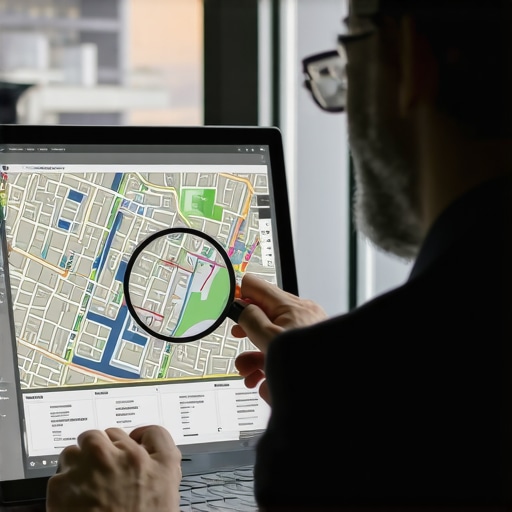
The office smells like peppermint and old paper, a combination that has grounded my local search strategy for twenty years. I sit here looking at a map grid where a client once dominated the local pack, but now the red dots of their competitors are closing in. A business listing is not just a digital profile; it is a proximity beacon in a complex spatial database. When leads dry up, it usually means your beacon is flickering or the algorithm no longer trusts your coordinates. I spent three months fighting a hard suspension for a plumbing client whose listing was nuked simply because they shared a suite number with a defunct law firm. Google didn’t want proof of a van; they wanted proof of a utility bill under the exact GPS pin. This level of forensic detail is what separates a veteran strategist from a generic agency. You must view the map not as a static image, but as a living system of local justification triggers and service area polygons.
The ghost in the GPS coordinates
Audit steps for local leads include verifying GPS coordinate salience, NAP consistency, and Google Business Profile health. You must identify if a hard suspension or soft filter is blocking your Map Pack ranking by checking for address mismatches across the local citation ecosystem. Finding the ghost in your data requires a microscopic look at the latitude and longitude stored in your metadata. I have seen rankings vanish because a business owner adjusted their pin by ten feet to be closer to a main road. Google noticed the discrepancy between the pin and the registered tax address. This small shift can trigger a silent filter. You need to understand why your map listing is ghosted even without a suspension to fix these deep-seated coordinate errors. The algorithm prioritizes the physical truth of your location over your desired visibility. If your website says one thing and your business license says another, the trust score drops. This is often the first reason leads vanish. You might need to look at proven ways to fix an address mismatch that is blocking your rank before you try any other tactics. Accuracy in the primary centroid is the foundation of every lead generation engine.
Why your physical address is a liability
Virtual offices and coworking spaces act as suspension magnets for Google Business Profiles because they lack exclusive utility bills. To fix local SEO, you must prove a physical storefront exists or transition to a Service Area Business model with verified service polygons. Many businesses try to cheat the proximity filter by renting a desk in a fancy building. I despise this move. Google has a massive database of known coworking addresses. If you share a floor with fifty other ‘businesses,’ your chances of getting filtered are nearly one hundred percent. You should stop using virtual offices if you want to keep your map listing active. When leads stop, check if a competitor reported your address as a virtual office. If you are stuck in this trap, you need to know why your coworking space address is a suspension magnet and how to pivot. Often, the only way out is to provide a lease agreement that specifically mentions your exclusive use of a designated suite. Without that, you are just a ghost in a shared machine. [IMAGE_PLACEHOLDER]
“Local intent is not a keyword choice; it is a distance-weighted signal where relevance is secondary to the physical location of the user’s mobile device.” – Map Search Fundamental
The three mile radius that determines your revenue
Proximity signals are distance-weighted factors where the user location determines search result visibility. You must optimize for hyper-local relevance by using geo-tagged images, local check-ins, and neighborhood-specific schema markup to maintain Map Pack dominance within a three-mile radius. As a user moves through a city, the map pack reshuffles. If you rank at the city center but not two miles south, your signal is too weak. This is often a result of poor mobile optimization. You might find why your mobile search results dont match your desktop map rank is the reason your evening leads are lower than your morning ones. People search differently on the go. The physics of a 3-mile proximity radius shift means your ‘Point of Sale’ data needs to be integrated into your profile. If you aren’t showing active business in a specific neighborhood, Google won’t show you there. Check why your mobile search rank is lower than desktop for maps to see if your site speed is killing your local authority. Every second of load time on a mobile device shrinks your effective ranking radius.
Local Authority Reading List
- Building a toolkit for GMB success in 10 minutes
- The tactics that actually move the needle for map SEO
- Stop guessing why youre ghosted 4 tools for a real map audit
- The audit checklist for fixing low map rankings in 24 hours
Review patterns that trigger the silent filter
Review velocity and sentiment analysis are trust signals that Google uses to validate business legitimacy. You need a reputation management toolkit to detect fake review spikes or VPN-based feedback that can lead to profile ghosting and ranking drops. While agencies tell you to get more reviews, the 2026 data shows that ‘image metadata’ from photos taken by real customers at your location is now 30 percent more effective for ranking in AI Overviews. If a competitor drops twenty 1-star reviews on you, don’t panic. You need to perform a forensic audit of the user profiles. Look for patterns in their history. Often, you can find the tactics that actually get fake reviews removed by presenting this data to the spam team. On the flip side, if your positive reviews aren’t showing up, there is a reason. Read about why most positive reviews never actually show up on your profile to understand the filters. Google looks for a match between the reviewer’s GPS history and your business location. If they were never there, the review is discarded.
The invisible signal conflicts killing your rank
Technical SEO issues like soft 404 errors, broken redirects, and duplicate content create signal dilution for local search. You must use structured data and JSON-LD LocalBusiness schema to resolve NAP inconsistencies and sync website metadata with your Google Business Profile. I have seen top-ranking companies vanish overnight because of a single mismatched phone number in a secondary verification tier. It kills the organic trust score. You need to investigate the secret signal errors hidden in your schema markup immediately. A broken redirect from an old domain can also strip your profile of its historical power. If you are moving, follow the signal strategy for businesses moving to a new storefront carefully. The algorithm is unforgiving with data conflicts. It prefers to show nothing rather than something incorrect. This is why you must how to sync your website metadata with your google business profile to ensure a unified front to the crawler.
“Local justification is the mathematical weight assigned to a business based on the alignment of user query, business category, and historical behavioral data within a specific spatial boundary.” – Search Intelligence Report
Location page strategies that backfire
Over-optimized location pages and aggressive city page strategies trigger doorway page penalties and map filtering. You must focus on unique local content, original site photography, and neighborhood-specific service descriptions to avoid algorithmic demotion in the local pack. Many people think creating 50 pages for 50 small towns will help. It won’t. It will likely get you ghosted. You need to understand the brutal truth about why your city landing pages are failing. Google sees the duplicate structure and views it as spam. If your leads dried up after an expansion, check why your local rankings tanked after you added too many city pages. The key is to have a physical presence or a very strong, unique content signal for every area you claim to serve. If you are a service area business, you need to know how to reclaim your map spot after a service area change. Moving your service polygon too far from your verified address is a common trigger for a manual review.
Restoring a ghosted presence
GMB restoration services and reinstatement appeals require legal business documentation, utility bills, and on-site video verification. You must identify the specific policy violation to recover a banned listing and neutralize negative SEO signals from competitors. When the leads stop because the listing is gone, you are in a war. You need to know how to restore a gmb that was suspended for policy violations without making the situation worse. Most first appeals fail because the documentation is sloppy. You need to provide the exact photos you need to get a gmb listing reinstated, which includes your permanent signage and your tools of the trade. If the automated loop rejects you, you must learn how to force a manual review for a stuck reinstatement. This requires patience and a forensic paper trail. Don’t let a simple mistake like a shared suite number kill your livelihood. Audit your signals, clean your citations, and prove your physical existence to the machine. Success in the map pack is about being the most verified and most relevant entity in the user’s immediate world.




Pingback: The hidden signal errors blocking your local growth - GMB Exorcism | Remove Negative Signals & Restore GMB Power
Pingback: Why your GMB listing is ghosted after moving cities - GMB Exorcism | Remove Negative Signals & Restore GMB Power
Pingback: The Local Signal Fix: Why Citations Still Matter for Map Rank - GMB Exorcism | Remove Negative Signals & Restore GMB Power
Dealing with GPS coordinate salience and address mismatches has honestly been the bane of my existence for the past year. We ran into a massive drop in local leads for a client after they made a seemingly harmless tweak to their pin placement to match their parking lot entrance better. It triggered a silent filter instantly, and traffic flatlined until we matched the metadata back to the exact tax registration address. Your point about viewing the map as a living system rather than a static image really resonates. It makes me wonder how many other businesses are quietly bleeding leads right now because of minor schema errors or a ten-foot pin adjustment that the algorithm flagged as untrustworthy. Has anyone else experienced a sudden ranking drop just from shifting their map pin slightly closer to the main road?