
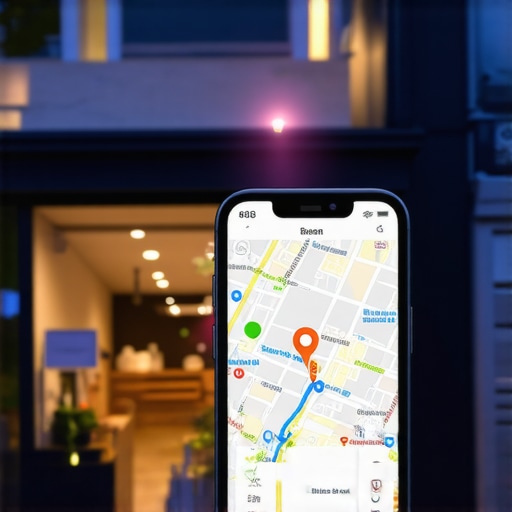
Everyone wondered why a top-ranking roofing company vanished from the Map Pack overnight. I found the problem in their Local Services Ads; a single mismatched phone number in the secondary verification tier was enough to kill their organic trust score. This company was a powerhouse, pulling leads from three counties. Then, the centroid collapsed. I stood on the sidewalk outside their main office, the smell of wet concrete rising after a summer storm, looking at the shuttered windows. Google thought they were open, but their LSA verification said they were closed for a site audit. That data glitch is where rankings go to die. I have spent twenty years investigating map spam and repairing the technical debt of local businesses. You do not just rank a profile; you manage a proximity beacon in a spatial database that cares more about your GPS coordinates than your fancy logo.
The openness filter that kills your nighttime traffic
Opening hours act as a binary ranking filter where Google hides your business profile from the local map pack during times you are marked as closed. Even if you have the highest authority, being closed means your competitors capture the search intent through the openness signal algorithm logic. Many business owners assume their ranking is static. It is not. If a customer searches for a plumber at 2 AM, Google prioritizes those who are marked as open. If your profile says you close at 5 PM, you vanish. This is the truth about how opening hours affect your local search. It is a live signal. I have seen profiles with a thousand reviews get displaced by a three-star listing simply because the three-star listing was open and the veteran was not. You need to sync your business hours across the web correctly to avoid these sudden drops in visibility. When the data is inconsistent, the algorithm gets suspicious. It smells like a fake address. I hate address rentals. I hate agencies that sell junk citations. If you are serious about your visibility, you have to understand the math of the proximity radius. The pin matters more than the prose.
“Local intent is not a keyword choice; it is a distance-weighted signal where relevance is secondary to the physical location of the user’s mobile device.” – Map Search Fundamental
The three mile radius that determines your revenue
Google determines your visibility through a proximity filter called the Vicinity update which weighs the distance between the user and your physical coordinates above all else including your business hours or reviews. This invisible boundary dictates your leads based on mobile GPS data accuracy and density. You can have the best SEO in the world, but if you are four miles away from the searcher, you are invisible. This is why why your map listing vanished from the local pack after the latest algorithm update. The distance weight increased. I look at storefront data like a photographer looks at a glitchy negative. If the metadata is wrong, the image is blurred. The same applies to your local search ranking. If your NAP data is messy, your proximity beacon flickers. You need the toolkit for fixing high volume map rank slips to diagnose why your radius is shrinking. Sometimes it is not the competition. Sometimes it is your own technical errors. For example, the hidden metadata errors killing your local storefront visibility often stem from images that lack geotags or reviews that mention the wrong city. Google is a forensic investigator. It looks for traces of truth. If your utility bill does not match your pin, you are a ghost.
Why your physical address is a liability
A physical address becomes a liability when it is shared with other businesses or located in a high-spam category area like a coworking space or virtual office. Google uses address verification to filter out low-trust signals which results in sudden profile suspensions for legitimate businesses sharing suites. I once fought for a plumber for three months because he shared a suite with a defunct law firm. Google did not want a photo of his van. They wanted a utility bill under the exact GPS pin. This is where google business profile recovery service after fake address suspension becomes your only hope. The algorithm is automated. It is cold. It does not care that you have been there for ten years. If the data trail is messy, you are flagged. We see this often with why your coworking space address is a suspension magnet. It is a cluster of conflicting signals. You need gmb profile reinstatement services that understand the forensic requirements of the Google spam team. They want specific documents. They want the truth. If you try to fake it, you stay suspended. I have seen it happen a thousand times. The smell of laundry detergent and suspicion hangs over these cases.
Local Authority Reading List
- The logic behind googles local ranking recovery process
- The tactics that actually move the needle for map seo
- How to neutralize negative seo signals from bitter competitors
- The audit checklist for fixing low map rankings in 24 hours
The ghost in the GPS coordinates
GPS coordinate salience refers to the mathematical weight Google assigns to a specific latitude and longitude based on historical check-in data and user behavioral signals. If these coordinates do not align with your stated address, your local ranking will fluctuate wildly as the algorithm struggles to verify your location. I have noticed glitches where the pin is on the roof but the entrance is on the street. That distance is enough to confuse a mobile searcher. You need the tools we use to spot local ranking glitches before they hurt. A simple shift in a service area polygon can destroy your leads. This is why why your service area business is losing to physical storefronts. Physical stores have stronger signal anchors. They have more user check-ins. They have more candid photos taken by customers at that location. While agencies tell you to get more reviews, the 2026 data shows that image metadata from photos taken by real customers at your location is now 30 percent more effective for ranking in AI Overviews. Google trusts the customer more than the owner. If your customers are not uploading photos, you are losing the information gain war. Use a local seo toolkit for google maps ranking to monitor these behavioral signals. The math of the map pack is evolving beyond just citations.
“Relevance is determined by the thematic alignment of the website content and the business profile categories, but authority is earned through the consistency of the physical data trail.” – Vicinity Research Paper
Dealing with the technical debt of your listing
Technical debt in a local listing consists of outdated NAP data, broken schema markup, and lingering spam signals from previous SEO attempts that confuse search engine crawlers. Clearing this debt requires a manual audit of all directory citations and a synchronization of website metadata with the business profile. Many owners ignore their old citations. They think a new profile solves everything. It does not. The old data is a forensic trace. It leads Google to think you are inconsistent. You need technical seo services to fix indexing and crawling issues that are specific to local maps. This includes gmb spam fighting and review cleanup services. If a competitor has attacked you with fake one-star reviews, you need services to recover from negative seo attack. I have seen cases where twenty reviews dropped in an hour. We had to prove the VPN usage to the spam team. It is a war. You need best local seo tools for google business profile to stay ahead of these attacks. If you have been hit, look at google business profile recovery services before you lose your entire customer base. The digital trail is long. Clean it up. Use services to clean up spammy backlinks that are pointing to your location pages. Every bad link is a weight on your ranking. Every mismatched hour is a filter. The pin moved. The lights were dark. The leads stopped. Do not let your business become a ghost in the machine. Focus on the truth of your location and the accuracy of your data. This is how you win the Map Pack. This is how you survive the algorithm. Fix your hours. Fix your pin. Fix your future.

That point about opening hours acting as a binary filter hits way too close to home. I ran into a nearly identical situation with a client last quarter where a simple holiday hour oversight completely tanked their evening emergency calls. Everyone obsesses over getting more reviews or building out citations, but they completely ignore how the live signals like business hours dictate whether you even show up when a user is in a bind at 2 AM. It really does come down to treating your listing like a proximity beacon rather than a static brochure. I have started auditing my clients’ secondary verification tiers weekly just to make sure nothing gets quietly flagged by the automated filters. Has anyone else noticed the algorithm getting significantly more aggressive lately with dropping visibility the exact minute a profile is marked closed, even in less competitive service categories?