Why Your Map Rank Tracker Is Lying About Your Actual Storefront Traffic
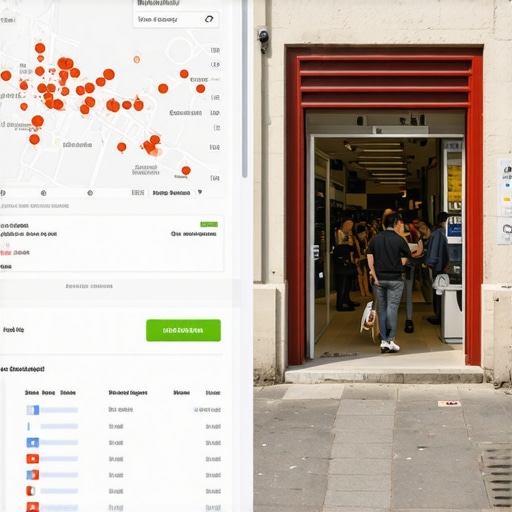
You open your email Monday morning and see it: a beautiful 13×13 grid of bright green circles. Every single one of them has a “1” in the center. According to your google maps rank tracker, you are the king of your city. You dominate the local map pack for every high-value keyword in your niche. Your SEO agency is taking a victory lap.
But then you look at your phone. It hasn’t rung in three hours. You check your storefront – the waiting room is empty. You look at your bank account, and the numbers don’t reflect a business that is supposedly “dominating” the most valuable real estate on the internet. This is The Green Grid Paradox: the frustrating reality where your software tells you that you’re winning, while your business reality tells you that you’re losing.
Rankings are a leading indicator, but they are not a result. If you have been relying on a google maps ranking service that only provides screenshots of green dots without correlating them to actual revenue, you are being fed vanity metrics. It’s time to pull back the curtain on why these tools lie and how to actually measure google business profile seo success in a way that impacts your bottom line.
To understand why this gap exists, we first need to look at How to Fix Misleading Data in Your Local Keyword Tracking Reports to ensure your foundation is solid.
How Map Trackers Actually Work (and Where They Fail)
Most local seo software operates on a simple premise: it simulates a user at a specific latitude and longitude. The software sends an API request to Google, spoofing a GPS location, and asks, “Who ranks for ‘plumber near me’ at this exact coordinate?” Google returns the results, and the tracker marks your position.
The problem is that these local seo ranking tools check rankings in a vacuum. They operate in a “clean” environment at a specific millisecond. Real-world search doesn’t happen in a vacuum. Google’s local algorithm is built on three pillars: Proximity, Relevance, and Prominence. While trackers are excellent at simulating proximity, they are notoriously bad at accounting for the nuances of relevance and prominence as perceived by a real human user.
When a real person searches on their mobile device, Google considers their search history, their current movement speed, their past interactions with your business, and even the “intent” behind their query. A rank tracker doesn’t have a search history. It doesn’t have “intent.” It is a bot. By relying solely on these snapshots, you are ignoring the dynamic nature of the local algorithm. You may rank #1 for a bot, but because of “proximity bias” or a lack of real-world user engagement signals, you might be invisible to a customer standing just three blocks away.
5 Reasons Your “Rankings” Aren’t Turning Into Calls
If your google business profile optimization efforts are resulting in high rankings but low conversion, one of these five factors is likely the culprit.
1. The “Ghosting” Effect
You might see a green circle on your tracker, but your listing is actually being filtered out for real users. This happens when Google detects overlapping signals between your business and another nearby. If you share a building, a phone number, or even a similar category with a more prominent competitor, Google may “ghost” your listing to provide variety in the search results. You can learn more about this in our guide on The Invisible SEO Signals Blocking Your Business from the Map Pack.
2. Signal Conflicts
Your gmb seo tools might show you ranking, but behind the scenes, your listing is suffering from internal data conflicts. Inconsistent NAP (Name, Address, Phone) data, conflicting service areas, or multiple listings for the same entity can cause Google to lose trust in your location. This leads to a scenario where the rank tracker catches a “glimpse” of you, but the algorithm suppresses you for actual high-intent searches. We’ve identified 7 Hidden Signal Conflicts Sabotaging Your Google Maps Ranking that you should audit immediately.
3. Zero-Click Searches
Sometimes, you actually are ranking #1, but the user never clicks. In 2024 and beyond, Google is increasingly answering queries directly in the local pack. If your profile doesn’t have a compelling “Call” button, high-quality photos, or recent reviews, the user gets the information they need (your hours or address) and leaves without ever interacting with your listing. You’re “ranking,” but you aren’t engaging. This is where google maps optimization becomes more about conversion than just visibility.
4. Bot-Driven Data and Spammy Embeds
Many low-quality google maps ranking services use map embeds and bot traffic to “force” a ranking. While this might turn your tracker green temporarily, Google’s AI is becoming hyper-aware of these fake signals. In fact, The Backlink Trap: Why Spammy Map Embeds Are Getting Listings Flagged explains how these tactics can actually lead to a shadowban or suspension, even while your tracker claims you’re winning.
5. The Proximity Trap
A google maps rank tracker often uses a tight radius. If you rank #1 in a 2-mile radius but drop to #20 at 2.5 miles, your “average” ranking might look great, but you are missing 90% of your potential market. If your business relies on a wider service area, those green circles in your immediate parking lot are essentially worthless for google maps lead generation.
The ROI of Local SEO: Measuring Real Business Impact
To escape the trap of vanity metrics, you must shift your focus from “where do I rank” to “how much revenue did this generate.” Calculating the local seo ROI requires a more sophisticated approach than just looking at a grid.
The formula for ROI is simple in theory but complex in execution: (Revenue from SEO – Cost of SEO) / Cost of SEO. To get the “Revenue from SEO” number, you need to track the entire journey from visibility to conversion. Here is how you do it:
- Google Business Profile Insights: Don’t just look at “Views.” Look at Actions. How many people clicked to call? How many requested directions? How many visited your website? This is your primary data source for getting more calls from google maps.
- GA4 Conversion Tracking: Use UTM parameters on your GBP website link (e.g.,
?utm_source=google&utm_medium=organic&utm_campaign=gbp). This allows you to see exactly what users do on your site after they click your map listing. - Call Tracking: Use a unique tracking number on your GBP listing. This is the only way to differentiate between a customer who found you on the map versus one who found your website through traditional organic search.
By 2026, Google’s ability to detect “fake” proximity and engagement will be nearly perfect. If your google business profile seo strategy isn’t resulting in real-world actions, the algorithm will eventually catch on and demote your prominence.
Fixing the Gap: Aligning Rankings with Traffic
If your data is lying to you, how do you turn your tracker into a truth-teller? It starts with cleaning up the technical debt associated with your listing. You need to move beyond simple google business profile optimization and into the realm of “Ranking Repair.”
First, you must Wipe These 5 Toxic Signals to Reclaim Your Map Pack Spot. These include duplicate listings, incorrect categories, and “poisonous” backlinks that are dragging your prominence down. Once the toxic signals are gone, you can use a google business profile audit tool to ensure your NAP data is pristine across the web.
Second, focus on “Prominence.” This is the most misunderstood part of the local algorithm. Prominence is how well-known a business is in the real world. This is achieved through Mastering Ranking Repair Through Powerful SEO Signal Optimization. This involves getting mentions in local news, participating in community events that generate local backlinks, and ensuring your review velocity is consistent and authentic.
Finally, ensure your listing is optimized for the user, not the bot. Use google business profile optimization techniques that prioritize high-resolution, geo-tagged images and keyword-rich (but not keyword-stuffed) descriptions. If a human finds your listing helpful, Google will eventually find it authoritative.
If you find that your rankings have suddenly plummeted despite your best efforts, you may be a victim of an algorithm update or a competitor’s “negative SEO” campaign. In these cases, you need to look at Map Rank Tanking? 4 Stealth Ranking Repair Fixes for 2026 to get back on track.
The Path to Map Dominance
While local seo software is a necessary tool for direction, it is not the destination. A green grid is a map, not the treasure. The treasure is a phone that won’t stop ringing and a storefront full of customers. If your current google maps rank tracker is showing you a world that doesn’t match your bank account, it’s time to stop looking at the circles and start looking at the signals.
True google business profile seo is about integrity. It’s about ensuring that your digital footprint is an honest, powerful reflection of your physical business. If your listing is currently suspended or struggling to gain traction, following GMB Restoration Best Practices for Enhanced Local Search Visibility is your first step toward recovery.
Don’t let vanity metrics blind you to the reality of your business. If you want to rank higher on google maps and stay there, you must focus on real user engagement and signal health. If your data doesn’t match your revenue, it’s time to perform a manual audit or hire a google maps ranking expert who understands that the only metric that matters is your ROI.