
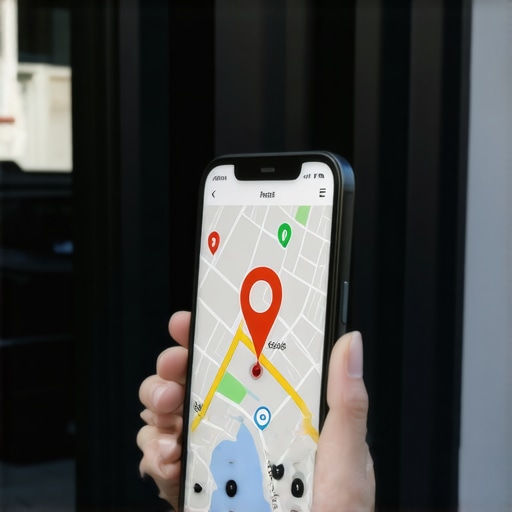
Why Your Storefront Address Is Triggering GMB Red Flags
I smell coffee and the crispness of a fresh logistics chart every morning before I open the dashboard. To me, a Google Business Profile is not a social page. It is a proximity beacon in a spatial database. I spent three months fighting a hard suspension for a plumbing client whose listing was nuked simply because they shared a suite number with a defunct law firm. Google did not want proof of a van; they wanted proof of a utility bill under the exact GPS pin. That experience taught me that the local algorithm does not care about your brand story. It cares about the logistics of your physical existence. If your data trail is messy, you are a ghost.
The phantom suite number and the fraud filter
Google Business Profile flags occur when address data lacks physical precision or overlaps with high-risk entities. This happens because the algorithm uses spatial clustering to identify spam patterns. If your storefront is in a building with ten other businesses but no unique suite numbers, the system assumes you are a virtual office or a lead generation shell. You must provide primary documents like a utility bill or a commercial lease that specifically anchors your business to a longitude and latitude point. Use proven methods to prove your physical location when the system rejects your standard paperwork.
The logistics of a storefront are unforgiving. When you share an address, you are fighting for the centroid. This is the mathematical center of a search area. If three businesses in the same category share a building, Google often filters out two to provide variety to the user. This is not a penalty; it is a search quality filter. To survive this, you need to ensure your digital footprint is distinct. This starts with fixing the nap inconsistencies you didnt know existed in your older directory listings.
“Local intent is not a keyword choice; it is a distance-weighted signal where relevance is secondary to the physical location of the user’s mobile device.” – Map Search Fundamental
The three mile radius that determines your revenue
Proximity is the most powerful ranking factor in the Map Pack algorithm today. While you might want to rank across an entire city, your storefront address creates a proximity boundary that usually caps at three to five miles for competitive terms. Google calculates the travel time and distance from the user to your door. If your address is registered in a residential zone but you claim to be a retail shop, the red flags will fly. You need the maps ranking toolkit for local service businesses to understand how these boundaries shift based on user density.
I have seen businesses lose 80 percent of their calls because they moved their office two blocks away. The pin moved. The relationship to the local POI (Point of Interest) changed. This shift causes the Local Trust Score to reset. To mitigate this, you should look into the signal strategy for businesses moving to a new storefront to ensure the algorithm follows your move without dropping your rank. If you do not manage the NAP (Name, Address, Phone) transition perfectly, the system will flag the new address as a duplicate of the old one.
Why your physical address is a liability
A physical address becomes a liability when it is associated with previous business suspensions or virtual office providers. Google maintains a blackbook of addresses known for Map Spam, such as Regus or WeWork locations. If you register your business there, you are basically asking for a manual review. The algorithm is designed to favor permanent signage and street-level entrances. If you are struggling, you might need how to handle a hard gmb suspension when the appeal fails if your address was the primary trigger.
Service area businesses have it even harder. They often try to hide their home address while ranking in a dense downtown core. This mismatch between the verified address and the service area polygon creates a logic gap. When Google sees a plumber located in the suburbs claiming to serve a city 50 miles away, it de-ranks them in favor of a closer competitor. You can see why your service area business is losing to physical storefronts and how to fix that spatial logic error.
Local Authority Reading List
- The errors in your nap data that you probably missed
- The secret signal errors hidden in your schema markup
- How to debug a ranking drop when search console shows nothing
- How to clean up the citation mess killing your map rank
Schema errors that trigger silent filters
Incorrect LocalBusiness schema markup creates a conflict between your website and your Google Business Profile. This conflict leads to indexation errors where Google cannot verify which data set is the source of truth. If your website schema lists a different phone number than your GMB, you will be suppressed in AI Overviews. It is essential to use the errors in your schema code blocking local clicks to audit your structured data for hidden mismatches.
We use JSON-LD to feed the Knowledge Graph. If the @id field in your schema does not match your CID (Google Maps ID), the link is broken. The logistics of the web require perfect synchronization. Without it, your citations are just noise. You must how to sync your nap data across the entire web to ensure that every mention of your address reinforces your physical location. While many agencies focus on links, the real power lies in coordinate salience.
“Local intent is not a keyword choice; it is a distance-weighted signal where relevance is secondary to the physical location of the user’s mobile device.” – Map Search Fundamental
Forensic patterns in the citation trail
Google uses citation consistency to verify that a business actually exists at its claimed address. If a storefront address appears differently across Yelp, Apple Maps, and Bing, the Trust Score drops. The algorithm looks for forensic traces of your business history. If you previously operated under a different name at the same address, Google may flag your new profile for brand overlap. You need fixing the brand overlap when you merge local listings to prevent this.
Cleaning up a messy trail is a manual process. You cannot just blast new citations over old ones. That just creates more noise. You need citation cleanup services for local businesses that actually log into old accounts and delete the duplicate listings. This is about data hygiene. If your address is listed as “Street” in one place and “St.” in another, it usually isn’t a problem; however, if the zip code is off by one digit, the system fails to map the entity correctly.
The technical debt of an old domain
Migrating a local business website to a new domain often breaks the link to the existing Map Pack ranking. This happens because the Google Business Profile is tied to the original URL. When that URL changes, the authority signal is interrupted. You need seo services to migrate rankings from old domain without losing gmb power to handle the 301 redirects and signal restoration. If the transition is sloppy, your profile might get shadow-banned.
The logistics of a domain move are complex. You are moving a digital storefront. If the new site has 404 errors or redirect loops, the local bot will crawl it and decide the business is no longer reliable. Use the fast track to fixing 404 redirect loops to keep the crawl budget focused on your location pages. A ranking drop after a website update is rarely a coincidence. It is usually a technical signal failure.
Managing the multi location logistics
Scaling a local brand requires a rigorous blueprint for managing multiple physical storefronts without triggering mass suspensions. Google is highly suspicious of brands that suddenly open five locations in one city. They look for unique phone numbers and local employees at each spot. If you use the same phone number for all locations, you will be flagged for spamming the map. You should study the multi-location blueprint for consistent local leads to avoid these traps.
Every location needs its own local signal stack. This includes geotagged photos of the interior and exterior. The algorithm uses computer vision to verify that the storefront signage matches the business name on the profile. If the sign is just a vinyl banner or a piece of paper taped to a door, the verification will likely fail. High-quality street-level data is the best defense against a red flag. You must the exact photos you need to get a gmb listing reinstated if you ever hit a hard suspension.
Winning the proximity war
The map is a grid. Your business is a coordinate. To win, you must be the most trusted coordinate in your radius. This involves more than just getting reviews. It requires behavioral signals. When people search for your business and then physically drive to your address, Google tracks that GPS movement. That is the ultimate verification signal. If your address is a fake storefront or a vacant lot, no one will drive there. The algorithm sees this lack of real-world movement and drops your rank. Focus on real traffic and accurate data. Use the gmb audit protocol for reclaiming your top 3 spot to ensure every part of your profile is tuned for maximum proximity power. The logistics of search are changing; however, the physical location of your business remains the primary anchor of your digital success.




Pingback: Why Your Hyperlocal Strategy Is Triggering Doorway Page Penalties - GMB Exorcism | Remove Negative Signals & Restore GMB Power
Pingback: Sorting the Chaos of Merged Listings That Broke Your Local SEO - GMB Exorcism | Remove Negative Signals & Restore GMB Power